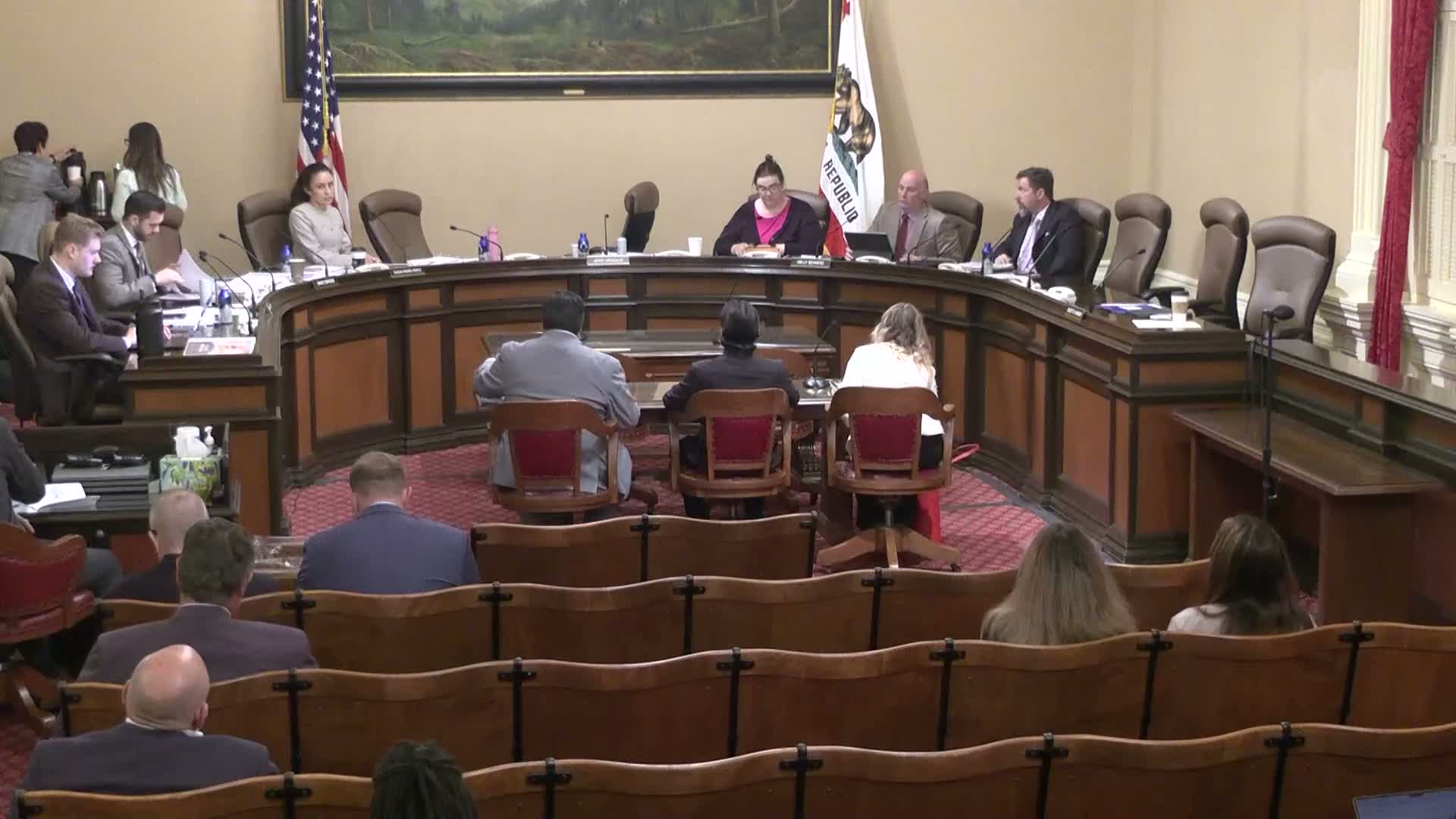
Committee approves expansion to enforce California'wide ban on masked law enforcement after federal court guidance
Loading...
Summary
SB 1004 would extend the "No Secret Police" ban to state law enforcement so the statute applies evenly to federal, state and local officers; authors and victims'family testimony drove urgency, while law-enforcement associations urged a good-faith exemption and warned of increased liability and staffing impacts.
Senate Bill 1004, a follow-up to last year's No Secret Police Act, would expand the state's prohibition on masking by law enforcement to include state officers so the law applies evenly across federal, state and local agencies. The committee moved the measure as amended after an extended exchange between victims' witnesses and law-enforcement representatives.
The bill's sponsor described a February federal district court ruling that upheld California's power to ban masking but required the prohibition to apply evenly to avoid constitutional problems. The author said the amendment fixes that gap so the ban can be enforced across all levels of government.
A victim of an incident testified about masked agents approaching his family in an encounter that included gunfire; he said masked, unidentified agents acted with "complete impunity." Prosecutors Alliance Action and numerous city and civil-rights advocates supported the bill.
Representatives of statewide law-enforcement associations, the California Police Chiefs Association and county sheriffs cautioned that subsection g removes immunities and imposes civil liability without a clear good-faith exception for officers acting under rapidly evolving circumstances. They warned the bill could exacerbate staffing shortages and expose officers to civil suits for reasonable, real-time choices. Committee members acknowledged those concerns and urged the author to consider a narrowly drawn good-faith protection while maintaining the ban's accountability goals.
The committee recorded the motion to pass SB 1004 as amended to Appropriations; the clerk later recorded the bill passing committee with votes and keeping it on call for absent members. Members emphasized the need to balance accountability for masking designed to avoid identification with practical protections for officers who must make split-second safety decisions.