Get Full Government Meeting Transcripts, Videos, & Alerts Forever!
Get email alerts on the Juvenile Justice topic
No spam. Unsubscribe anytime.
Senate committee backs Archuleta bill to set rules for juvenile "less restrictive" placements
Summary
The Senate Public Safety Committee advanced SB 1157, authored by Senator Archuleta, which directs the Judicial Council to develop court rules and guardrails for less restrictive placements (LRPs) used in juvenile probation, after supporters cited safety gaps and opponents warned against rigid uniform standards.
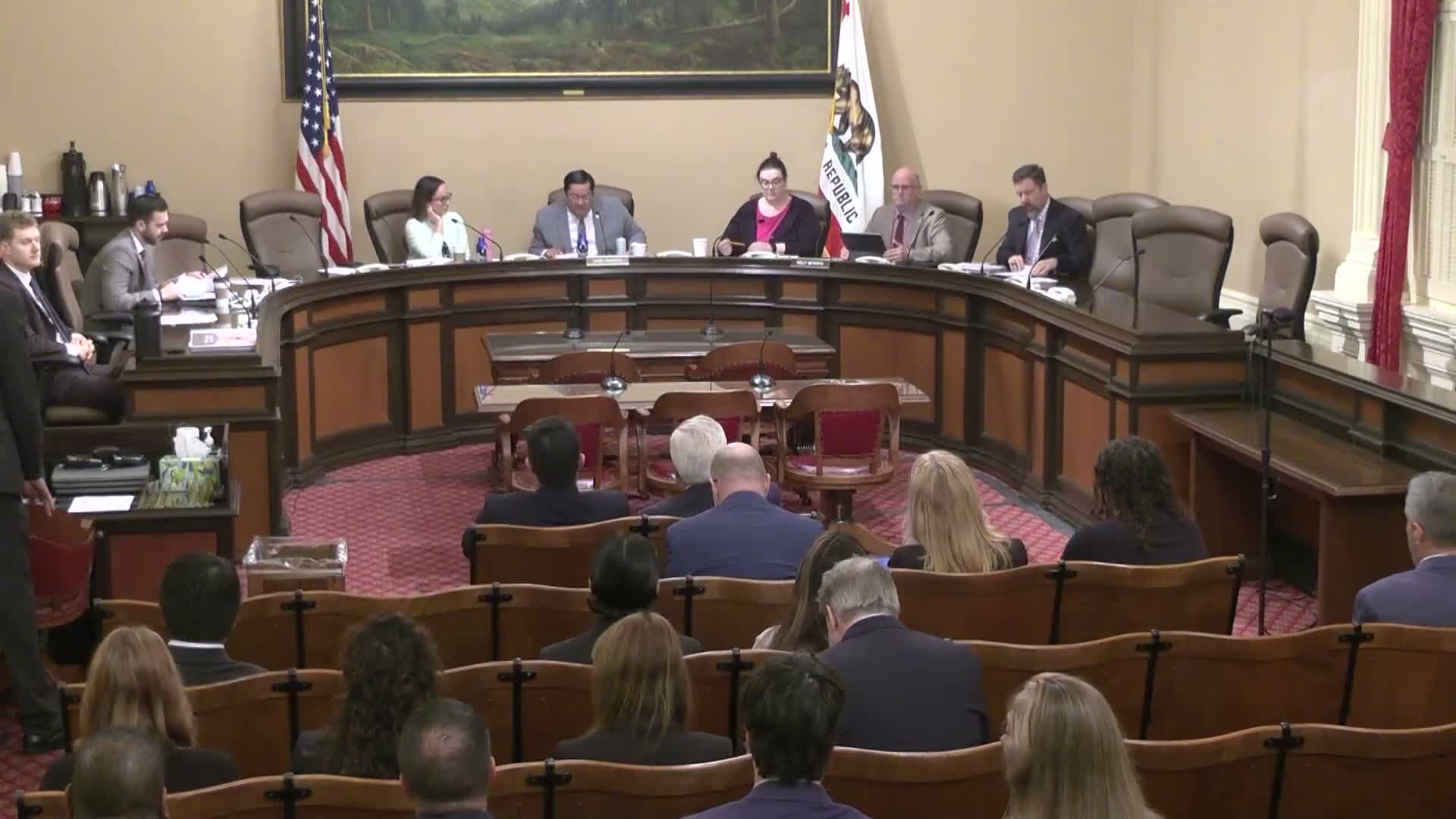
Senate Bill 1157, authored by Senator Archuleta, advanced out of the Senate Public Safety Committee on April 14 as members agreed the state needs clearer safeguards for less restrictive placements used during juvenile probation.
Archuleta told the committee the bill "will create a framework for less restrictive placements in the probation setting" and accepted committee amendments to require the Judicial Council of California to develop rules of court covering insurance, staffing, background checks and zoning compliance for residential LRPs. "It is critical that these are rules, and we have rules in place to protect the ward and the community," the author said.
Chief Issa Ehman Kraus, president of the Chief Probation Officers of California and Contra Costa County chief probation officer, said LRPs were intended as step-down options when youth show progress but currently lack consistent standards: "No licensing, no inspections, no background check requirements for staff, no consistent standards, and no oversight," Kraus said, asking for an "aye" vote.
Opponents, including Lindsay Dazell of the California Youth Defender Center and Ruben Moreno of the Sacramento County Public Defender's Office, urged caution. Dazell said the bill "drastically limits LRP options and undermines the continuum of care model" established after the state closed the Division of Juvenile Justice, and Moreno cautioned the Judicial Council lacks the substantive expertise to set program operational standards such as insurance or training.
Vice Chair Ciarco framed the choice as balancing youth-centered, less-restrictive care with adequate accountability for providers and staff, noting past harms when privately run facilities lacked oversight. He said he would support the bill and urged continued engagement with opponents.
The committee recorded the motion and later voted to pass SB 1157 as amended out of committee. Next steps: the measure was held on call until a final recorded committee tally was taken; the clerk later reported the bill passed committee with the stated amendments and will proceed to the Appropriations Committee per the committee motion.
Actions and next steps described in committee included directing the Judicial Council to develop rules of court and confirming that counties be given notice when LRPs operate within their jurisdiction. The bill's supporters and opponents agreed to continue negotiations on details such as which agency should set technical standards and how to account for diverse LRP models.
The committee's discussion highlighted competing priorities: ensuring young people are moved into safe, rehabilitative settings while avoiding one-size-fits-all rules that could exclude individualized or family-based LRPs. The author said she will keep working with stakeholders to address concerns raised by defenders and community providers.