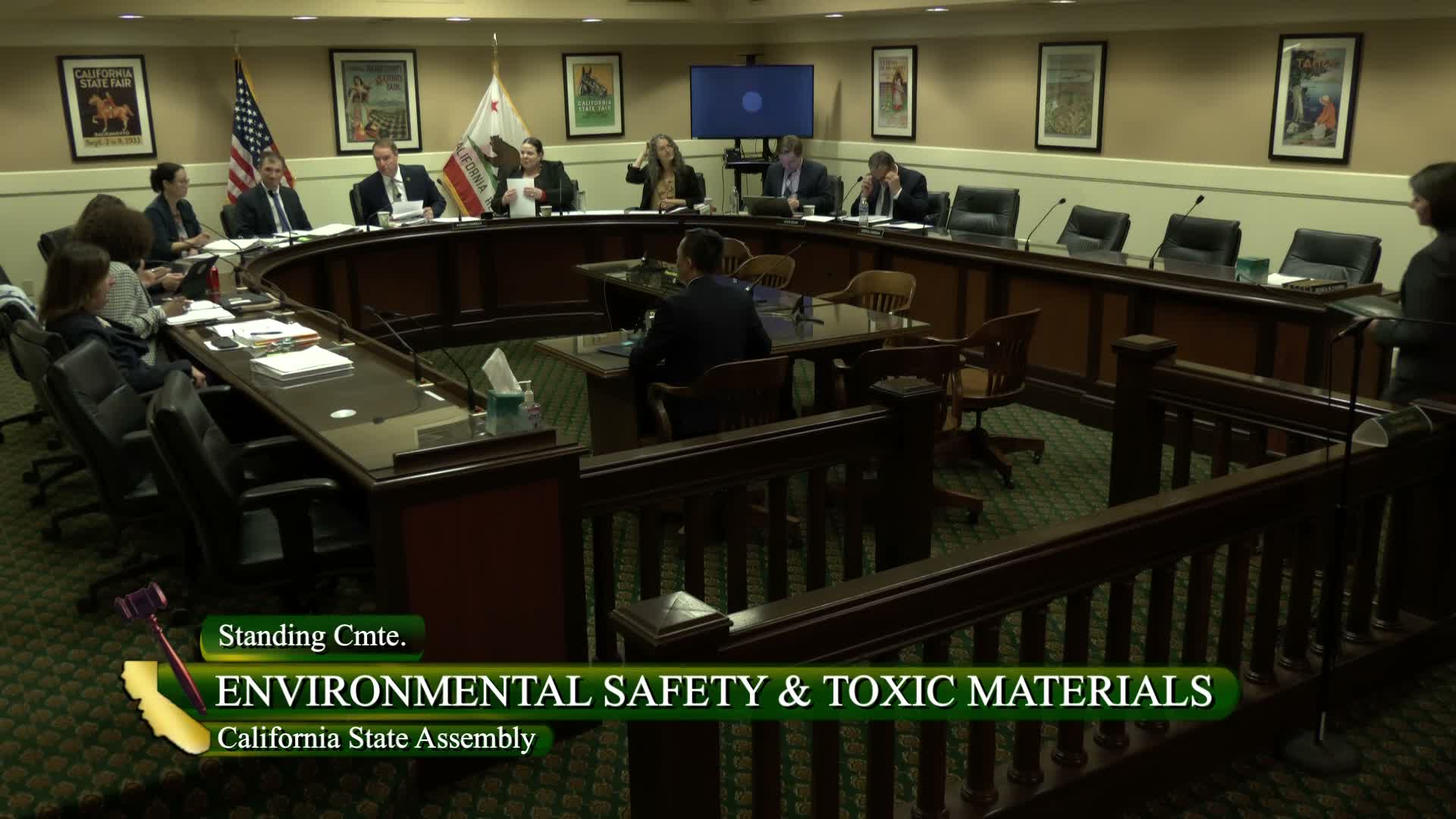
Committee sends infant‑formula testing bill to appropriations after mixed testimony
Loading...
Summary
AB 2302 would require manufacturers to test for select toxic elements in infant formula and post results online; consumer‑advocacy and pediatric groups supported transparency while industry groups warned of possible public confusion before federal standards are set.
AB 2302, presented on behalf of Assemblymember Celeste Rodriguez, would require infant‑formula manufacturers to test finished products for specified toxic elements (aluminum, arsenic, cadmium, lead and mercury) and publish results on their websites. Sponsors said many manufacturers already test and that the proposal mirrors prior state transparency laws for baby food.
Consumer Reports’ Brian Ronholm and Children Now cited testing that found detectable levels of some contaminants and urged transparency to empower caregivers and pediatricians. "There are many safe, inexpensive formula options on the market," Ronholm said, and staff argued public disclosure will help clinicians guide families.
Industry witnesses, including Missy Johnson of the Infant Nutrition Coalition of America, said infant formula is among the most regulated foods and that existing testing shows products meet EU limits; they warned premature or poorly contextualized disclosure could cause confusion and unintended shifts to unsafe alternatives. Industry representatives also objected to required language and QR code text in early drafts that could be interpreted as alarmist.
Committee outcome: after questioning and discussion the committee recommended an I (aye) vote and passed the bill to Appropriations; members signaled they would work with the author on labeling language and how federal FDA action (Operation Stork Speed) intersects with the state proposal.
Why it matters: the bill focuses on transparency for a highly regulated infant‑food sector, balancing parental right to information with concerns about communicating technical trace‑level results before federal action sets clear standards.