Get Full Government Meeting Transcripts, Videos, & Alerts Forever!
Get email alerts on the Pfas Pesticides topic
No spam. Unsubscribe anytime.
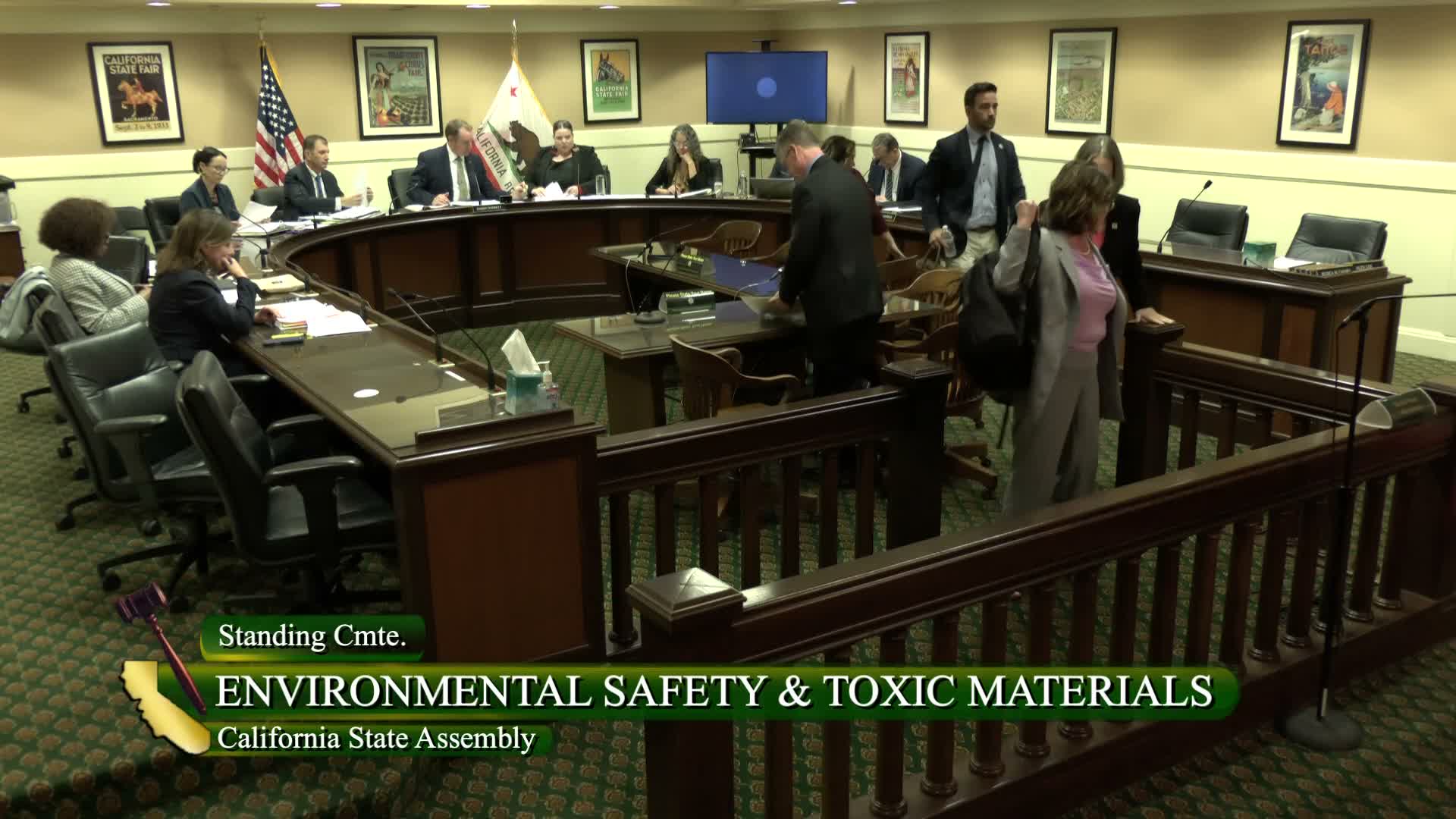
Heated committee debate over PFAS pesticide phaseout as bill moves on for further review
Summary
AB 1603, which would phase out PFAS‑containing pesticides and require disclosure and permitting, drew wide technical testimony from scientists, environmental groups and agricultural and industry associations; committee approved an I recommendation and kept the bill on call for appropriations after extended questioning on feasibility and timelines.
Assemblymember Schultz presented AB 1603, proposing a staged phaseout of PFAS‑containing pesticides: a ban on new PFAS pesticide approvals beginning in 2027, a 2030 prohibition on a subset of 23 pesticides already restricted in the European Union, and a broader phaseout by 2035. The bill would also require public disclosure and permit requirements for certain PFAS‑containing pesticide uses.
Public‑health and environmental witnesses, including David Andrews of the Environmental Working Group and Sekira Mescal of Pesticide Action Network, urged action, citing environmental persistence of PFAS, breakdown to short‑chain PFAS such as TFA, and biomonitoring showing rising levels in water and produce. “PFAS pesticides are contaminating our food and water,” Mescal said, and supporters argued that many viable non‑PFAS alternatives exist.
Industry and agriculture witnesses raised scientific and practical concerns. Jeff Dawson, formerly with U.S. EPA, and representatives of crop‑production groups said federal pesticide registration involves extensive data and risk assessment and that removing many active ingredients could leave few or no alternatives for targeted pests. Ag groups warned about possible crop impacts and lengthy timelines to develop and register replacement chemistries.
Committee members pressed both sides on how the bill would distinguish hazardous PFAS from less risky fluorinated molecules, regulatory overlap with federal review, and whether regional or sectoral exemptions were needed. The author said the bill is intended to accelerate protections where health risks and environmental contamination are evident and noted other states have begun similar steps.
Committee action: after extensive testimony and questioning, the committee issued an I recommendation and passed the bill to Appropriations (file was kept on call). The committee also signaled continued technical stakeholder work would be necessary on timelines and scope before final votes.
Why it matters: AB 1603 addresses a regulatory gap in pesticide evaluation for PFAS chemistries with potential long‑term environmental and health consequences; it pits public‑health urgency against industry concerns about agricultural practicality and regulatory timelines.