Get Full Government Meeting Transcripts, Videos, & Alerts Forever!
Get email alerts on the Library Policy topic
No spam. Unsubscribe anytime.
Hillsborough board debates library-materials policy, questions immunity clause for librarians
Summary
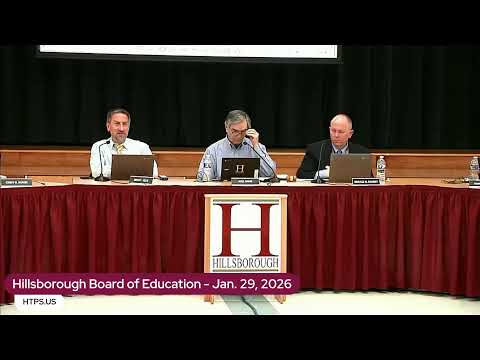
At its Jan. 29 meeting the Hillsborough Township Board of Education held an extended debate over policy 25-35 (library materials), focusing on a state-authorized immunity clause for library staff; members split over whether the language is too broad or necessary to protect professionals from meritless lawsuits.
The Hillsborough Township Board of Education spent much of its Jan. 29 meeting discussing policy 25-35, a second-reading policy implementing state library-materials rules that include a provision granting immunity to school library staff acting in good faith.
Board members who objected to the immunity clause said the phrase "good faith" was vague and could shield material they believe is inappropriate for students. "The immunity, as you mentioned, the word rubber stamp is a rubber stamp, and that's what makes it uncomfortable," one board member said, arguing the guarantee risks preventing meaningful oversight.
Other trustees and district officials defended librarians' professional judgment and the policy's removal procedures. "Our district librarians are professionals," a board member said, urging balance so librarians can select age-appropriate materials without fear of frivolous civil or criminal suits. Superintendent Mr. Volpe said parents already have ways to review and challenge materials and that the district would publicize access to library catalogs and the removal process.
Board attorney Doug Silvestro provided legal context during the presentation of the School Ethics Act and later on the policy debate, noting that advisory opinions and complaint procedures exist at the state level. He also emphasized that the policy includes a process for removal and that advisory and complaint channels are available to the public.
The discussion ranged from abstract concerns about the phrase "developmentally appropriate" to practical questions about whether parents can see lists of school-library holdings. A board member cited a recent required-reading decision (a ninth-grade title approved in January) as an example of where parents felt the line was blurred between required curriculum and optional library materials.
After extended debate, the board moved forward with the round of policy votes on the agenda; some members registered 'no' votes on specific items but the broader policy package moved as presented. The board president said the district would provide clearer information to families about how to access library holdings and the formal steps for requesting reconsideration.
The policy discussion was the meeting's most contentious moment and represents an intersection of state law, local oversight and community values; the board did not announce additional changes to the policy text at the meeting and indicated further review or public information steps would follow.