Get Full Government Meeting Transcripts, Videos, & Alerts Forever!
Get email alerts on the School Budget topic
No spam. Unsubscribe anytime.
Piscataway board hears budget preview as state aid swings and health benefits squeeze finances
Summary
The Piscataway Township Board of Education received a budget preview that cautioned unpredictable state aid, a projected 35% rise in health‑benefit costs and a working $6 million gap between anticipated expense increases and identified revenue measures; the district outlined potential mitigation steps including use of reserves and transportation efficiencies.
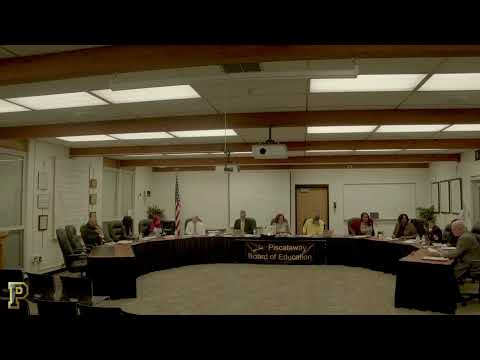
The Piscataway Township Board of Education on Tuesday received a budget preview warning that volatile state aid calculations and rising health‑benefit costs could leave the district facing a multimillion‑dollar shortfall next year, district presenters said.
The preview, delivered during the regular board meeting, laid out a range of scenarios shaped by a new governor’s delayed aid schedule, state formula changes and a projected 35% increase in the district’s health‑benefit costs. “Based on the way the formula looks to be trending…our state aid reduction would be capped at about $800,000 if those caps are in place,” the presenter said, noting that without temporary caps the formula could have produced cuts as large as $12 million in theory.
Why it matters: the district funds roughly 74% of its operating budget through the local tax levy, and the presentation said the board must plan for multiple scenarios while complying with the 2% tax levy cap (with limited exceptions). The presenter outlined a preliminary gap of about $6 million between projected expense increases (including salaries, special‑education and benefits) and currently identified revenue measures.
Key details from the presentation
- State aid and formula volatility: The presenter said changes to the state’s equalized valuation, district income factor and special‑education accounting have made aid less predictable; in the previous year application of caps limited a potentially severe cut and produced an $800,000 reduction rather than a much larger loss. The presenter noted that the board hopes legislative caps remain in place.
- Health benefits: Projected benefit cost increases were cited as the single largest pressure. The presenter projected a roughly 35% increase in the state plan, translating to an $8.5 million increase in expenses and creating pressure to seek a healthcare waiver or other offsets.
- Tax levy, bank cap and reserves: The presenter said 74% of district expenses are covered by the tax levy and explained the board’s limited remaining bank cap (about $266,000). The presentation emphasized that the board has avoided bonded debt and has completed about $44 million in capital projects over the last decade using capital reserves.
- Potential mitigations: Options the district is exploring include greater use of maintenance reserve, targeted staffing changes through attrition and vacancy management, transportation efficiencies (route consolidation), rental income and selectively using tax‑levy exceptions tied to healthcare costs.
Other program and facility notes
The presentation also reviewed capital work and program expansions: acoustic and PA upgrades at the high school, an e‑sports/gaming room and media center nearing opening, roof replacement and solar panel work at Quibbletown, and preschool classroom renovations that would expand free preschool seats (the district estimates it will be near capacity for preschool and among the largest non‑Abbott programs in the state).
Board comments and next steps
Dr. Tom Connors, speaking during the fiscal planning report, reiterated that the district will receive final state‑aid figures when the official state release arrives (expected in mid‑March), and that a detailed tentative budget with exact numbers will be presented at the March meeting. The presenter said the board is developing contingency plans and will return with firm figures and specific proposals.
Votes and procedural actions
The board later carried routine personnel and fiscal committee motions (see Votes at a glance). No formal budget vote was taken at the meeting; the presenter said a full tentative budget will be approved for submission at a future meeting once state aid figures are finalized.
The presenter and other district leaders identified above are part of the meeting record and appear on the board agenda for upcoming budget hearings.