Get Full Government Meeting Transcripts, Videos, & Alerts Forever!
Get email alerts on the School Budget topic
No spam. Unsubscribe anytime.
Superintendent Dr. Abdullah lays out $54.2 million budget, asks for 2% levy to preserve staffing and expand student supports
Summary
New superintendent Dr. Abdullah presented a $54,208,312 proposed budget that would preserve staffing, add academic interventionists and mental-health supports, eliminate participation fees and fund safety and communications upgrades; the board discussed class-size data and scheduled follow-ups ahead of an April 29 meeting.
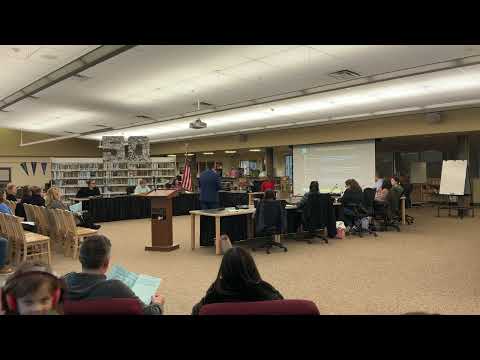
Superintendent Dr. Abdullah, in his first budget presentation since taking the job about 10 weeks ago, outlined a $54,208,312 proposed budget for the Bordentown Regional School District that he said is built on board goals and staff feedback gathered through a district-wide reflection process.
"We developed this budget through two critical pieces," Dr. Abdullah said, describing a staff reflection process (SCME) that informed priorities. He said the plan aims to maintain all current staffing levels, protect instructional continuity, add certified academic interventionists and behavioral/social-emotional clinicians, and eliminate pay-to-play fees for extracurricular activities.
The budget proposal would also fund a new unified district website and a consolidated family-communication platform (referred to in the presentation as PowerScript), implement online lesson-planning and evaluation tools for teachers and administrators, and complete Phase 1 of the Clara Barton playground project. Dr. Abdullah said the district seeks to add an additional special law enforcement officer (SLEO) so the district would have three total SLEOs.
Dr. Abdullah presented the budget's funding picture: general operations, a special revenue fund that includes preschool (listed at $2,224,100), and debt service. He described the funding mix as heavily reliant on local property tax—about three-quarters of revenue—roughly 16% from state aid, 4.3% for debt service and a small draw from fund balance. He emphasized the district will avoid drawing down capital or maintenance reserves to close gaps.
"We are only using less than half of 1% of our fund balance to make sure that we are properly funded in the event that we have a need," Dr. Abdullah said, adding that the district recently received roughly $493,000 more in state aid than last year but has seen a net loss of $1,770,000 in state aid since February, which he summarized as a roughly 17% decline over five years.
To support the plan, Dr. Abdullah said the district will ask taxpayers to raise the levy by 2%, the cap. He also noted a recent debt refinancing that yielded taxpayer savings and said the proposed spending allocates about 71% to employee salaries and benefits and roughly 12% to special education, technology and operations.
Board members asked for clarifications about class sizes and how the budget would affect them. Dr. Abdullah said his near-term priority is establishing and fully staffing a multi-tiered system of support to deliver academic and behavioral interventions, rather than immediately reducing class sizes. He gave current K–5 averages: homeroom size about 23 students, language-arts classes about 21, and math classes about 21.
"If we needed to deploy capital in the future to bring on additional staff members to decrease class sizes because it was detrimental to student success, we would be in a position to do that," he said, adding the district is focused on recurring, sustainable staffing rather than one-year fixes.
Board member Beth provided legislative updates, noting a vaping-awareness bill had advanced out of a health committee on March 9 with guidance for districts and campuses, and a March 16 committee vote to ban certain artificial dyes in school food had also moved forward; she said final action in the full Assembly was uncertain.
No formal vote on the budget was recorded during the meeting. Board members thanked staff and the Teachers Association leadership for participating in the budget process. The board’s next regular meeting is scheduled for April 29, when members plan to continue reviewing policy updates and budget items.