Get Full Government Meeting Transcripts, Videos, & Alerts Forever!
Get email alerts on the Education.curriculum topic
No spam. Unsubscribe anytime.
Wallingford-Swarthmore committee reviews Twig pilot, delays purchases until alignment and differentiation needs are clear
Summary
District presenters described a continuing pilot of Twig Science for middle school and said they may pursue a fuller fall pilot or alternative curricula (e.g., Amplify). Board members and a parent pressed for details on differentiation for neurodiverse learners and vendor integration with Schoology. No final purchase decision was announced.
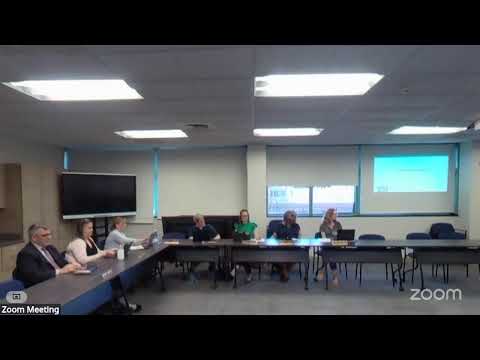
The Wallingford-Swarthmore School District Educational Affairs Committee on April 14 heard an update on the district’s review of secondary science curricula, including a middle-school pilot of Twig Science and consideration of other vendors such as Amplify.
District presenter Gabriel framed the work as tied to the K–12 science vision and Pennsylvania’s transition to standards aligned with the Next Generation Science Standards. "The vision is to cultivate learning experiences that invite all students to explore the wonder, beauty, and power of science," Gabriel told the committee, saying the curriculum review will be informed by the district task force and classroom pilots.
Presenters said the district is still evaluating Twig in middle grades and could expand to a fuller fall pilot or select an alternative product. "We decided with some recommendations from Dr. Criswell to try Twig Science," a curriculum presenter said, describing a pilot structure in which each grade-level team selects a unit, receives vendor training, runs the unit with students and then meets to share feedback.
A high-school science teacher who worked earlier with NGSS-style shifts told the committee that many vendors are not yet integrated with the district’s learning platform, Schoology, and that misalignment with district systems makes immediate purchases premature. That presenter emphasized a move toward three-dimensional learning—content, science/engineering practices and crosscutting concepts—rather than traditional rote instruction.
Committee members and attendees asked how three-dimensional instruction would support college-prep students and learners with diverse needs. Karen Rischel, a parent and liaison for the neurodiverse education advocacy team, asked whether the consultant’s work includes shaping differentiated lessons for neurodivergent learners. Presenters said teachers routinely adapt and differentiate pilot materials and described strategies—regrouping, teacher prompts and front-of-class supports—to make lessons accessible.
Board members praised the staff for a cautious, teacher-driven approach and for delaying purchases until materials better align with classroom practice and district systems. The committee did not vote on a purchase; presenters said a decision will come after further evaluation and that some teachers will meet again in PLCs and bring recommendations in the coming months.
The Educational Affairs Committee is scheduled to meet next on May 12; the curriculum review will continue to be discussed at that meeting and in departmental PLCs.