Get Full Government Meeting Transcripts, Videos, & Alerts Forever!
Get email alerts on the Land Use topic
No spam. Unsubscribe anytime.
Planning board approves amended Princeton University baseball stadium plan with conditions
Summary
The West Windsor Planning Board approved an amended final major site plan for a Princeton University baseball stadium (PB24‑08), approving a reduced‑size design, limiting lighting to automatic shutoff by 11 p.m., and conditioning sign and agency approvals. The vote was unanimous among members present.
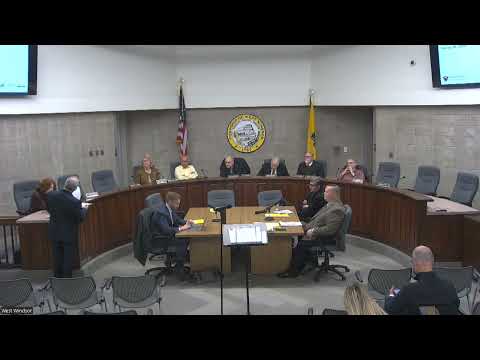
The West Windsor Planning Board on March 18 approved an amended final major site plan for the Trustees of Princeton University to build a smaller baseball stadium at the Lake Campus, concluding a public hearing and adopting conditions recommended by township professionals.
The board’s motion approved PB24‑08 — an amendment to a previously approved stadium — that removes the project’s originally proposed second floor, reduces overall building height and impervious surface, and reduces seating from about 463 seats in the original approval to roughly 300 seats (including six ADA seats and about 163 fixed seats), the applicant’s attorney said. "The major change is that this one's a little smaller," said Christopher Degurezia, attorney for the applicant, summarizing the amendment as a consolidation of operations to a single level.
University architect Ron McCoy, who testified as an expert, walked the board through the revised site plan and said the project retains the approved orientation and most amenities while lessening visual and stormwater impacts. "You have a reduction of impervious surface, a smaller building envelope, less floor area, less seating, [and] lower building height," McCoy said, describing the intent to integrate the structure with existing campus topography.
Board members pressed the applicant on several points during the presentation. The board asked how patrons with mobility challenges would reach the stadium; the applicant said accessible pedestrian routes from campus parking and a nearby intersection/drop‑off are part of the previously approved plan and remain in place. On concessions, McCoy confirmed there are no fixed concession stands in the stadium: food service would be handled by food trucks or the existing Racket Center concession stand.
A central point of debate was landscape and tree removal. The applicant’s landscape team described a reconfiguration that reduces the number of trees between the ballpark and the adjacent cross‑country course. "We decided that that buffer was really not necessary," McCoy said, and the team said remaining trees are clustered to provide shade around plazas and tented areas. Several board members and a Shade Tree Commission representative noted the change from an earlier plan that showed many more trees; the applicant responded the proposed tree count complies with ordinance requirements and that some choices were driven by cost and programmatic priorities.
Township professionals reported no outstanding technical objections. Board planning consultant David Novak said staff comments in memos dated March 6 and March 10 had been addressed, while traffic consultant Kwasi Masood and township engineer John Taylor told the board that traffic, parking, stormwater and other technical items were either resolved or could be managed through the standard conditions. The board also read a March 5 memo from the fire department concluding that emergency access and water supply are adequate.
The board’s approval included a design waiver for an exterior donor wall sign, standard construction and engineering conditions, and required outside approvals where applicable (for example, county planning and sewer authority sign‑offs). The motion as stated on the record was to approve the amended final major site plan and sign waivers, subject to the professionals’ listed conditions and any necessary jurisdictional approvals.
The board closed the public hearing after no members of the public requested to speak. The board then moved for approval; the roll call showed affirmative votes by (as read for the record) Pankov, Councilwoman Geevers, Mayor Marte, Vice Chairman Hoberman and Chairman Carr, and the motion carried.
Next steps for the project include finalizing design details and obtaining any agency permits and confirmations listed as conditions of approval. The board did not set a schedule for follow‑up site inspections in the hearing record.