Get Full Government Meeting Transcripts, Videos, & Alerts Forever!
Get email alerts on the Land Use Development topic
No spam. Unsubscribe anytime.
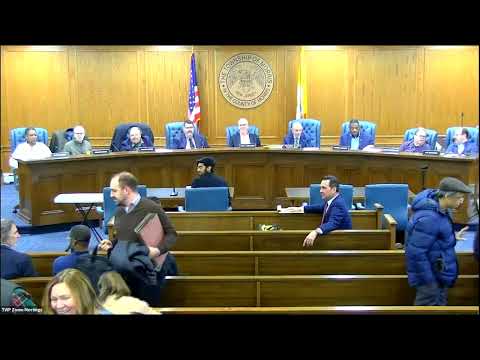
Contested South Street Gardens hearing spotlights wetlands, stormwater and noise concerns; board continues matter
Summary
During a lengthy continuation of the 383 South Street LLC case, neighborhood witnesses and experts presented video and aerial evidence alleging tree removal, fill in wetland transition areas, increased impervious surface, and repeated loud events; the board continued the hearing to April 27, 2026, for further testimony and potential site follow-up.
The Morristown Board of Adjustment on March 5 heard several hours of testimony in the continuing case over 383 South Street LLC(the property operating as South Street Gardens), where residents and experts raised wetlands, stormwater and noise concerns that could affect whether the board grants the applicantvariance relief.
Applicant counsel Larry Kelly told the board the applicant planned a short recall of civil engineering testimony and an acoustical witness to respond to specific points raised by objectors. Neighbors and objectors then presented a mix of video, social-media postings and drone/aerial images they said show events, tree removal and soil/yard material pushed into low-lying areas behind the property.
Eric Vieira, a fact witness who lives nearby, told the board he has recorded what he characterized as repeated events and daytime and nighttime operations at the site and showed a set of video clips and posts he said demonstrate disturbance and noise. "It's loud and clear," he said of sound aimed toward Prospect Place; he added that he observed what he said were large logs and soil placed behind the site and referred to repeated use of leaf blowers and other equipment.
A wetlands specialist retained by the objectors warned the board that recent site conditions appear to include placed fill, debris and removal of vegetation within mapped wetland transition zones and drainage channels. "In my opinion, the activities that went on out there are a violation of New Jersey state law," the scientist testified, and said some of the drainage features on the property connect to mapped state waters and therefore carry a 50-foot riparian buffer. He recommended the board treat any approval as conditional on required state permits.
The board chair and the municipal engineer reiterated that the board itself lacks jurisdiction to grant relief under state wetland statutes; any local approval would be conditioned on the applicant obtaining all necessary state permits from the New Jersey Department of Environmental Protection.
Acoustical expert Jack Zybura presented noise modeling based on on‑site measurements and 3D propagation modeling. He said baseline nighttime/early-evening levels at the nearest homes are roughly 50 dBA and that modeled events would raise measured levels substantially depending on whether indoor windows are closed and whether music or speakers are outdoors. "With windows open, it gets vastly louder," he said; his simulations showed levels above typical daytime and nighttime local limits at several neighboring residences when the modeled event sources were outdoors or windows were open.
Applicant counsel and the applicant's witnesses noted the applicant has submitted plans and that certain operational limits and mitigation (for example, keeping windows closed during events, installing higher-performing glazing, restricting outdoor amplified music, and switching to electric blowers) could reduce impacts. The applicant and its engineer also disputed some of the objectors' interpretations of aerial images and social-media posts and said they will recall witnesses to respond.
After testimony and questions, the board agreed to continue the hearing. The chair announced the matter will continue on April 27, 2026, at 7 p.m. in the same room; the board said it may schedule an interim special meeting if necessary and encouraged individual members to review the site with the applicant's permission prior to reconvening.
The hearing record contains multiple exhibits (video and photo collections, OPRA responses, aerial/drone imagery, and expert reports) that the board will review along with further expert testimony before making any decision. Any approval will be expressly conditioned upon the applicant securing any required state permits and satisfying local conditions to mitigate impacts.
What happens next: the board will take additional testimony at the continued hearing, and any request for local approval will be conditioned on DEP approvals for wetland and riparian impacts and on clarifications to the stormwater and noise mitigation plans.