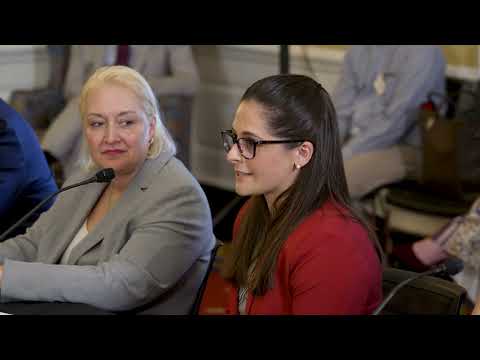
Ryder executive says tax breaks drove investment in trucking during downturn
Loading...
Summary
Sarah Welman, senior director of corporate affairs at Ryder System, told a roundtable that allowance of EBITDA and 100% bonus depreciation helped the trucking industry weather a multiyear freight downturn and encouraged investment in newer, safer equipment benefiting small-business customers and U.S. communities reliant on trucking.
Sarah Welman, senior director of corporate affairs at Ryder System, told a roundtable that recent tax provisions "couldn't have come at a more pivotal time" for the trucking and supply-chain industry, helping companies invest in newer, safer equipment as the sector recovers from a multiyear freight downturn.
Welman said Ryder — which she identified as serving more than "40,000 customers, many of which are small businesses" — benefits from tax rules such as the allowance of EBITDA and 100% bonus depreciation. "It helps drive long term capital investment," she said, adding that such investment yields safety and efficiency benefits as Ryder and its customers purchase, rent, lease and maintain trucks and trailers of all sizes.
The executive emphasized the broader importance of trucking to communities, saying about "80% of our U.S. communities rely exclusively on trucking for their food, medicine, anything, all the essential household goods." She thanked the roundtable organizers and their leadership for advancing what she called "pro growth and long term tax certainty for the trucking and supply chain industry."
Welman's remarks framed the tax provisions as a tool to support both industry recovery and small-business customers that depend on outsourced logistics, rather than proposing specific new legislation or agency action. The roundtable remarks did not include opposing testimony or a formal vote.
Welman closed by reiterating Ryder's role in port-to-door outsourced logistics and transportation and expressing appreciation for the opportunity to speak to policymakers and stakeholders.