Lifetime Citizen Portal Access — AI Briefings, Alerts & Unlimited Follows
Citrus Heights planning commission forwards Gateway Activation Plan, including three roundabouts and trail connections, to City Council
Loading...
Summary
The Planning Commission voted to forward the Gateway Activation Plan (GAP), the associated Mitigated Negative Declaration and map amendments to City Council, endorsing a Class I trail extension and three roundabouts intended to close a regional trail gap and improve pedestrian and bicycle safety.
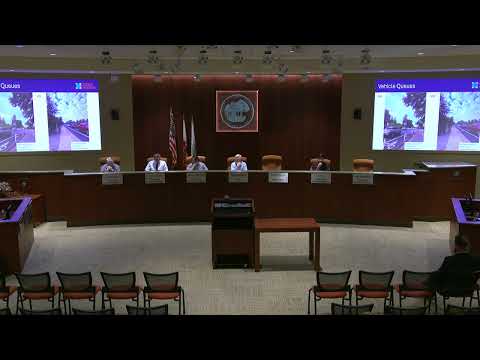
The Citrus Heights Planning Commission voted on April 14 to forward the Gateway Activation Plan (GAP) and its Mitigated Negative Declaration (MND) to the City Council for final consideration and funding, endorsing a trail extension and three roundabouts intended to close a regional trail gap and improve safety.
The commission’s recommendation covers amendments to the city’s bikeway master plan, pedestrian master plan and General Plan bikeway map and accompanies a final MND prepared under the California Environmental Quality Act. Staff said the project must secure construction funding after council approval; staff estimated the project is in early engineering and that actual construction would be several years away.
City Community Development Director Casey Kempenar described the GAP as a way to "close a gap" between existing trails in Citrus Heights and the Dry Creek Greenway in neighboring Roseville, saying the city obtained state funding to advance the project toward construction and will pursue additional grants. "This money was set aside specifically to get this project as close as we can to construction," Kempenar said.
City Engineer Leslie Bloomquist presented traffic and design analysis that informed staff recommendations. Bloomquist said the corridor carries heavy traffic — about 14,000 vehicles per day on a portion of Old Auburn Road — and that roughly 25% of drivers are using the corridor as a cut-through rather than starting or stopping in Citrus Heights. To address connectivity and safety, staff identified a preferred trail alignment extending east from Robert Creek Court to the city limits and proposed a primary trail crossing at Argo Drive.
To improve safety and operations, staff recommended three roundabouts at the Argo Drive, Wachtell Way and the Oakwood Hills/Linda Creek Court intersections. Bloomquist said roundabouts "force drivers to slow down" and reduce conflict points, which lowers crash risk and severity. She also said roundabouts can add pedestrian crossings and provide opportunities for landscaping or public art.
The project’s environmental review resulted in a Mitigated Negative Declaration. Allison, the environmental reviewer, told the commission the initial study identified potential impacts that are being addressed through specific mitigation measures tracked in a Mitigation Monitoring and Reporting Program, including dust and air-quality controls during construction, pre-construction biological surveys and cultural resources training for crews. The MND was released for a 30-day public review period from Feb. 18 through March 19; staff said comments from that period were included in the final MND presented to the commission.
Residents and property owners expressed mixed views during the public hearing. Anne Mastry, who identified herself as a longtime neighborhood resident, thanked staff for attention to the problem but warned that roundabouts may not slow all drivers. "I've witnessed people playing Russian roulette trying to get across even in a wheelchair," Mastry said, urging that designers consider additional crosswalk treatments or signalized options if needed. Staff responded that the project is at roughly 30% preliminary engineering and that design refinements — including the angle of deflection for roundabouts and possible rectangular rapid-flashing beacons or other crosswalk measures — would be evaluated during final engineering.
After brief commissioner discussion and a voice vote, the commission approved the staff recommendation by unanimous voice vote and moved the item to City Council; the commission’s determination carries a 10-calendar-day appeal period for filing a written notice with the city clerk. Staff said, if council approves the project and funding is secured, the city will pursue final engineering and construction funding rounds.
The project will require some property and right-of-way acquisitions at select corners to build the roundabouts, staff said, and concentrating improvements on the west side of Wachtell Way is preferred because the east side is maintained by Sacramento County. City staff also reported robust public outreach including workshops, pop-up events and direct conversations with affected property owners; staff noted survey results showing safety and trail connectivity as the top community priorities.
Next steps: the item goes to the City Council for review and potential approval; if approved, staff will pursue grant funding for final design and construction. The Planning Commission’s determination can be appealed to the City Council within 10 calendar days by filing the required notice and fee with the city clerk.