Austin staff: Highland Lakes inflows still below average despite recent rains
Loading...
Summary
Austin Water staff told the Water Forward Task Force that Highland Lakes inflows in early 2026 exceeded 2025 levels for March but remain well below long-term averages; combined storage was reported at about 1,660,000 acre-feet (roughly 83% full) and officials warned the region remains in drought and could approach DCP triggers if dry trends continue.
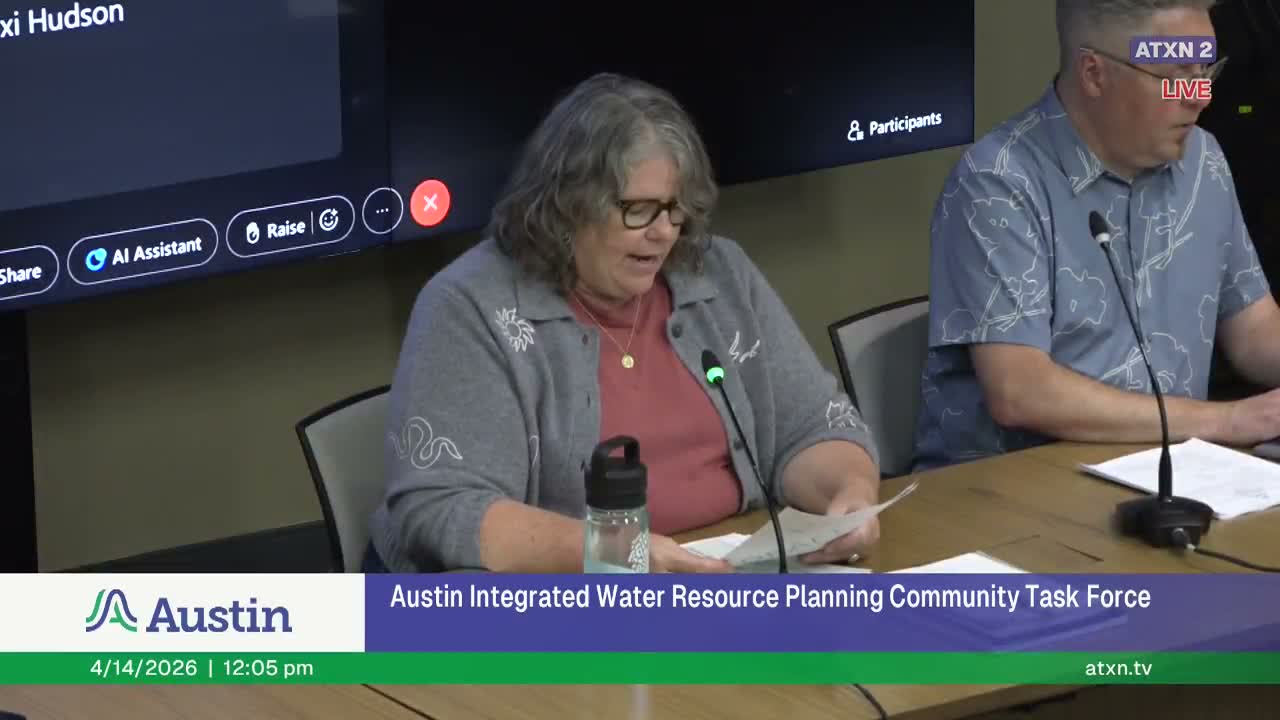
Emily Rafferty, Program Manager at Austin Water, briefed the Water Forward Task Force on conditions in the Lower Colorado River and Highland Lakes, saying March inflows were higher than in 2025 but "still much lower than the average." Rafferty reported combined storage for Lakes Travis and Buchanan at about 1,660,000 acre-feet and said the lakes were currently about 83% full, noting April rains were not yet included in the presented data.
Rafferty ran through statewide drought-intensity maps and a NOAA three-month outlook that projects above-average temperatures and equal chances of precipitation for May through July. She said an El Nio pattern is favored to develop this spring and summer, which could bring cooler, wetter conditions and some relief later in the year.
Task force members pressed staff on the US Drought Monitor and how it reflects local hydrology and aquifer conditions. Rafferty and other staff cautioned that the Drought Monitor focuses on precipitation and may not fully reflect soil moisture or runoff trends, and that deeper aquifer conditions can lag behind surface-water improvements. "Both are concerning," Rafferty said of recent and prior-year inflows.
The presentation also covered LCRA storage projections through October 2026 and highlighted a Drought Contingency Plan trigger at about 1,100,000 acre-feet. Staff flagged that continued dry conditions following the current projections could bring combined storage near that DCP trigger and said they would follow up on specific historic drought status requests the task force made during Q&A.
The task force did not take formal votes on water-supply policy at the meeting. Staff said they would provide follow-up information requested by members (including historical drought-monitor data) by email or at the next meeting.