Get Full Government Meeting Transcripts, Videos, & Alerts Forever!
Get email alerts on the Ethics Reform topic
No spam. Unsubscribe anytime.
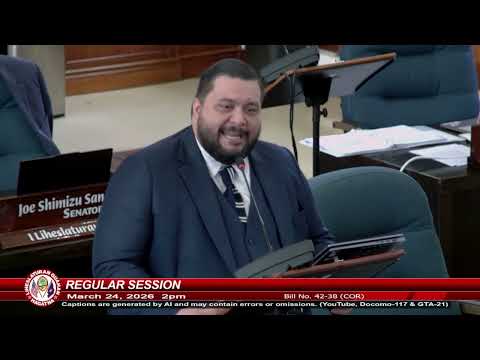
Ethics‑reform bill stalls after debate on composition and appointment powers
Summary
Bill 214‑38, intended to strengthen the Guam Ethics Commission by adding enforcement tools and lowering action thresholds, faced sustained floor debate over composition and the governor’s appointment power; an amendment to delete specific community‑recommendation language failed, a motion to advance the bill to third reading ultimately failed on the floor.
Senator Gomitata presented bill 214‑38 as an effort to modernize and strengthen the Guam Ethics Commission. The amended measure would require the chief executive to "seek and consider" recommendations from community organizations when making appointments, lower the Commission's vote threshold from five to four, and authorize administrative fines (up to $5,000 per violation) subject to a contested‑case process.
Floor debate focused on the commission’s composition and whether naming a short list of community organizations for governor recommendations would create a preference for those groups or unduly concentrate appointment authority in the governor. One senator moved to strike the language that named community organizations; the amendment failed on objection. Senators also debated restoration of a $50 per‑meeting stipend (the body restored the stipend by amendment) and whether eliminating compensation would impair recruitment and independence.
Critics warned the bill could allow politicized appointments because the governor is not bound to accept recommended nominees. Supporters said the change would broaden community input, modernize the statute, and provide the commission with clearer enforcement authority and transparency tools (including fines and an open website for public monitoring).
Outcome: an objection to moving the bill to third reading was sustained and the motion to advance failed on the floor; the bill remains under deliberation following multiple floor amendments and debate.