Lakewood lobbyist reviews 2026 short legislative session; capital wins, other priorities stall
Loading...
Summary
City contract lobbyist Shelley Helder told the Lakewood City Council the 2026 short session produced three supplemental budgets and several bills of interest: capital awards including $200,000 for H Barn Silos succeeded, while efforts to codify a community partnership program and secure implementation funding for parking standards did not advance.
Shelley Helder, Lakewood’s contract lobbyist in Olympia, told the City Council on April 13 that the 2026 short legislative session produced modest budget adjustments but mixed results for Lakewood priorities.
Helder said the 60-day session produced three supplemental budgets — operating, transportation and capital — and the legislature passed 268 bills. The supplemental operating budget increased spending by about $2.4 billion (partly drawn from the budget stabilization account) while the transportation and capital supplements added roughly $1.2 billion and $889 million, respectively. Helder called out a roughly $123 million increase for the Housing Trust Fund in the capital package.
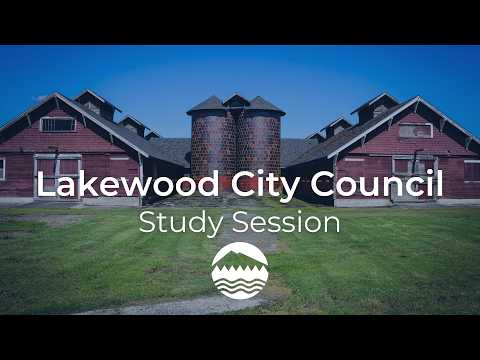
The presentation emphasized outcomes for items on Lakewood’s biennial legislative agenda. Helder reported the city’s $200,000 capital request for preservation of the H Barn Silos was fully funded in the final capital budget after local legislators prioritized it. By contrast, an effort to codify the community partnership program at Western State Hospital — advanced in prior sessions and sponsored by Senator Jeff Holy — passed the Senate unanimously and cleared a House committee but died in the House Appropriations Committee. Helder said the appropriations chair expressed philosophical resistance to codifying funding that the chair believes is already addressed in the budget.
Helder summarized several other topics staff tracked. Bills to change how public defense funding is distributed and to clarify timelines for court-related funding did not receive public hearings or final passage. Housing-related legislation that passed included HB2266, which requires permanent supportive and transitional housing in more residential zones and narrows allowable local spacing and occupancy restrictions, and SB6026, which expands residential development in some commercial zones while limiting ground-floor retail mandates for cities over 30,000 population.
On revenue, Helder revisited the millionaires’ income tax passed in 2025, noting its delayed effective date (Jan. 1, 2028) and an acknowledged reduction in local sales-tax revenue; the legislature included $200 million in a four-year outlook to offset local revenue impacts but distribution details remain to be resolved.
Helder urged the council to thank local legislators for capital funding wins, to prioritize timely project delivery so Lakewood remains a good steward of state capital dollars, and to begin interim outreach to shape 2027 priorities. Council members asked about alignment with the Association of Washington Cities and how the city should balance expressions of gratitude with communicating disappointment on unaddressed chronic pressures such as indigent defense funding and changes to automated license-plate-reader policy.