Get Full Government Meeting Transcripts, Videos, & Alerts Forever!
Get email alerts on the Land Use topic
No spam. Unsubscribe anytime.
Billings council narrows Billings 2045 map, removes blanket duplex allowance amid neighborhood‑character concerns
Summary
The Billings City Council voted to remove a proposed universal duplex allowance from the Billings 2045 future land use map, directing staff to craft targeted map categories to protect single‑family neighborhoods while complying with the state MLUPA law. Council and legal staff warned of legal risks and noted a pending Supreme Court decision that will change notice procedures on July 1, 2027.
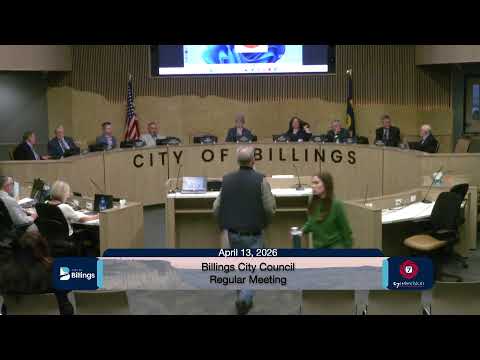
The Billings City Council voted on April 13 to exclude a blanket allowance for duplexes from its draft Billings 2045 future land use map, a move council supporters said preserves the character of established single‑family neighborhoods while staff and legal advisers work on a narrower, legally defensible approach.
Council member Roy Neese moved the measure and Mike Boyett seconded. After discussion about neighborhood character and state law, the motion carried; Council members Mark Nicholson, Amy Aguirre, Scott Aspenleiter and Andrew Lindley recorded themselves as opposed during roll call.
The action came after planning staff presented the 2045 housing analysis showing a need for roughly 16,200 new housing units by 2045 and described a new, expedited zoning application timeline (52 days in the typical case, longer if appealed). Planning staff had asked for council direction on three items: map designations, housing‑criteria voting and whether the council would meet jointly with the interim planning commission.
Council members who supported the removal argued it restores predictability for long‑established single‑family areas. "We have to look at how it impacts developed neighborhoods," Neese said during debate, arguing that many residents expect single‑family zoning to remain in place.
Opponents countered that allowing duplexes broadly is an important tool to increase housing supply and address affordability. "We're operating at huge deficits in housing," Council member Aspenleiter said, urging the council to keep options that encourage more doors.
City legal counsel cautioned that any new land‑use designation that effectively locks a neighborhood into a single zoning district for a 20‑year growth projection could invite legal challenge unless the city applies objective, defensible criteria. "The intent of this statute is to create a land use map that provides for designations that accommodate a future 20‑year growth projection," the city attorney said, warning that a designation limited to a single zoning district could be vulnerable if applied without clear, objective grounds.
Members also debated a pending Supreme Court ruling and statutory changes that will alter public‑notice and comment procedures for zone changes after July 1, 2027; planning staff said the court’s decision will remove the mailed notice/public meeting step and that public comment will be concentrated during plan‑making and map adoption phases.
Council and planning staff agreed to pursue a layered approach: staff will draft map category options (including a narrowly tailored category to protect some single‑family neighborhoods), develop objective criteria for any limits and return maps and language for council review. The council also signaled willingness to hold a joint meeting with the interim planning commission to work through map application and implementation details.
Next steps: staff will produce map drafts and suggested criteria for where any single‑family‑protective designation would apply and will schedule follow‑up briefings and the suggested joint meeting with the planning commission.