Get Full Government Meeting Transcripts, Videos, & Alerts Forever!
Get email alerts on the Oil And Gas Regulation topic
No spam. Unsubscribe anytime.
Loveland council hears divided views on tougher local oil-and-gas rules, avoids vote
Summary
City staff and industry experts presented proposed amendments to Loveland's development code that would add local setbacks, monitoring and public hearings for oil-and-gas projects; councilors expressed mixed views — some favoring state standards to avoid cost and legal exposure, others asking staff to return with a fuller ordinance — and no formal vote was taken.
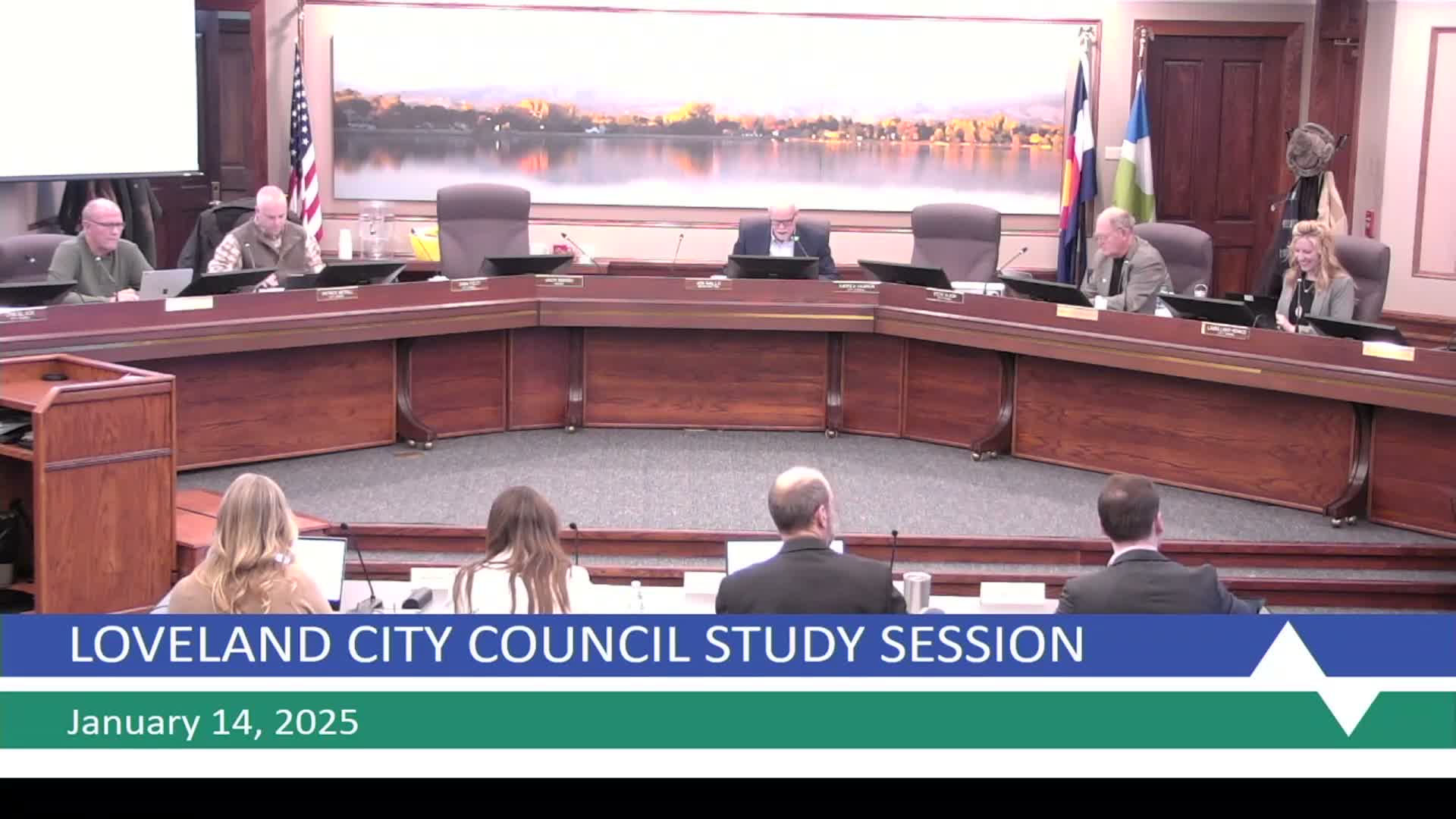
City of Loveland officials on Thursday held a prolonged study-session discussion of draft local oil-and-gas rules but did not adopt any ordinance changes.
Mayor Pro Tem John Mallow opened the session and staff presented proposed amendments to Title 18 of the Unified Development Code designed to give the city a greater role in siting and conditions for oil-and-gas activity now that Senate Bill 181 allows local surface regulation. Brett Stewart, assistant to the city manager, said the council was being asked for guidance before a moratorium on new local rules expires in early March 2025.
The staff-backed draft would add zoning limitations, presumptive setbacks (a 1,000-foot baseline from residences and a 2,000-foot presumptive setback in some circumstances), reverse setbacks for new residences near existing facilities, extended on-site continuous emissions monitoring (three years post-production rather than the state'required six months), a 24-hour complaint-response requirement, and permit-term changes (permits increased from two to three years with possible extension to four). Special counsel Matt Sura said the revisions largely mirror Larimer County'level provisions and were intended to put Loveland "on parity" and give the council a seat at site-specific decisions rather than relying solely on statewide regulators.
Industry representatives urged caution about moving beyond state rules. Tricia Fanning, an environmental consultant, told council the proposed changes were "duplicative, unnecessary, unreasonable" and "designed for one simple purpose, to ban oil and gas within the city limits," while Kate Schwartz, executive director of API Colorado, said Colorado'level rules and recent state rulemakings (including air and produced-water work) are strict and urged the city to wait for new state data before layering local requirements. Schwartz also noted oil-and-gas property taxes provided about $12.4 million to Thompson R2-J school district in 2022, a figure used to illustrate local revenue impacts from development.
Council members probed technical and legal details. Several asked whether data cited by staff and the CDPHE predated SB 181-era operational changes such as closed-loop flow-back, and whether the proposed tougher setbacks would risk a constitutional regulatory-takings claim that the city might struggle to defend. Staff and panelists stressed that some protections on the recently permitted CE pad were negotiated above state minimums (electrification, no on-site hydrocarbon storage, extended monitoring), but also acknowledged not all operators would match that level of commitments.
Public comment was split: several residents urged stricter local limits and criticized the meeting for featuring industry voices, while others emphasized economic and pragmatic reasons for relying on state standards. Brett Stewart asked the council to choose among three paths: (A) return the ordinance on tentative hearing dates (staff suggested a first reading Jan. 21 and second reading Feb. 18), (B) delay and direct staff to continue revising the draft, or (C) stop and keep the city tied to state/ECMC standards. Councilors expressed differing preferences in the study-session format — some favoring Option C (stay with state standards to avoid staff burden and litigation risk), others (including Councilor Black and Councilor Lykovich) asking that staff bring a refined ordinance back for a formal vote to reflect resident concerns.
No motion was made and no formal vote occurred; staff left the session with direction to refine materials and return with clearer options and supporting data. Stewart said staff will incorporate counsel and panel feedback and propose next steps for the council to consider in a future meeting.
The city provided residents a public-comment period during the study session and heard concerns about legacy (orphan) wells, noise, monitoring coverage and the capacity for city enforcement. Officials noted that state orphan-well funds and mitigation fees exist but that localers still have interest in site-specific conditions for projects within city limits.
Next procedural step: staff will return to council with revised ordinance language and supporting analyses, and with a recommended schedule for possible readings if the council elects to pursue local regulations.