Commerce bill would extend program timelines, add energy‑security authority and align heat‑pump rules with federal programs
Loading...
Summary
House File 4559 would give Commerce authority to maintain a statewide energy-security plan, extend timelines for electric-school-bus and solar-on-public-buildings programs, and align the state heat-pump program with anticipated federal requirements to allow incentive stacking and renter eligibility. Committee discussion focused on timelines, program mechanics and fraud-prevention; bill laid over.
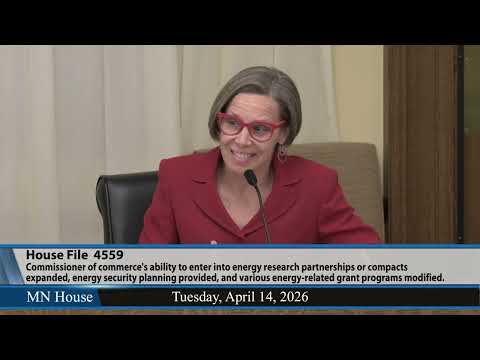
Chair Acum moved House File 4559 on April 14; Lisa Polish, assistant commissioner for federal and state initiatives at the Minnesota Department of Commerce, described the bill as largely technical but included substantive updates to authority, timelines and program eligibility.
Polish said Sections 1–2 authorize Commerce to develop a statewide energy-security plan ‘‘consistent with historic federal requirements that have since lapsed’’ and to codify the authority for ongoing energy-preparedness planning. Sections 3–5 extend timelines for applicants to complete existing programs including an electric school bus program and a solar-on‑public‑buildings program, because vehicles and projects take time from award to invoice. Polish said the Commerce proposal asks to push some deadlines by a year to ensure projects can invoice after award. She also said Commerce has submitted federal documents for heat‑pump programs and wants to align state rules so incentives can be stacked when federal programs are finalized and to expand eligibility to renters, including window‑unit heat pumps.
Representative Anderson and others pressed for follow‑up on how long existing 30‑day complaint windows have been law and asked for cost and implementation details. Representative Sexton raised concerns about renter‑installed systems and potential fraud if equipment leaves the property; Polish said Commerce will ensure program integrity through assessments, audits and permitting.
Members generally supported the bill’s technical fixes and requested follow‑up information. HF4559 was laid over for further consideration.