Lifetime Citizen Portal Access — AI Briefings, Alerts & Unlimited Follows
Lawmakers hear competing views on easement to unlock landlocked June Lake property in Cuyuna recreation area
Loading...
Summary
Proponents told the House Finance Committee that an 865-square-foot easement for a June Lake parcel would preserve access to the Galloping Goose trail and support local tourism; the DNR opposed the easement, saying it conflicts with the Cuyuna Country State Recreation Area's management plan and could set a problematic precedent. The committee laid House File 4787 over for possible inclusion.
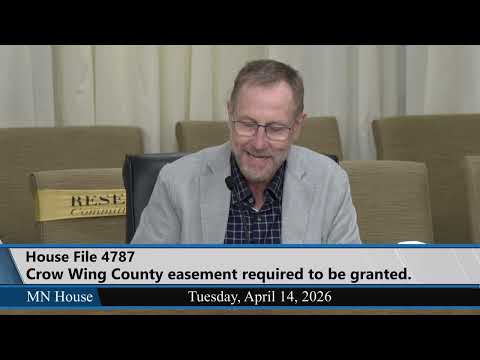
The House Finance Committee heard more than an hour of testimony on House File 4787, a bill whose sponsor says would grant an 865-square-foot easement to unlock a landlocked June Lake parcel in Crow Wing County and preserve access to the Galloping Goose trail system.
Representative Heintzeman, the bill sponsor, told the committee the measure is intended to "provide access to landlocked properties" and to protect a mountain-bike tourism economy that has grown around the Cuyuna Country State Recreation Area.
"We're talking about 860 square feet, approximately, of land that could be impacted by this easement," Heintzeman said, arguing the proposal would keep existing trail access in place while allowing modest overnight accommodations.
Tim Prinsen of June Lake LLC, who testified in support, said the company sought an easement after two years of local outreach and because the owners believe the DNR's denial leaves private property effectively landlocked. "Land in Minnesota can't be landlocked," Prinsen told the committee. He said the owners offered a possible land swap of roughly 1,700,000 square feet of undivided interest to the state and proposed small cabins consistent with the recreation area's own management plan.
Prinsen said the proposal would support the local economy and prevent what he characterized as a potential shutdown of the trail system. He told members the rec area hosts roughly 400,000 visitors a year and that the easement would allow modest overnight stays aligned with prior DNR plans.
Anne Pierce, director of parks and trails for the Minnesota Department of Natural Resources, opposed the easement as written. "The Department of Natural Resources has concerns regarding the proposed bill language," Pierce said, telling the committee the DNR denied the private easement application because it would conflict with the SRA's 100-year vision and management objectives to provide public recreation while preserving scenic values.
Pierce emphasized the precedent risk: "Placing an easement across state-owned land for private commercial use would set a concerning precedent," she said, noting the park and recreation system contains more than 800 inholdings and that similar easements could invite requests for commercial developments inside other SRAs.
Members pressed both sides on specifics: whether the DNR seeks to buy inholdings when they are listed (Pierce said the agency has made offers, sometimes appraised value plus 10 percent), the history of the SRA's management plans (1995 and later updates), and survey findings about which parcels are undivided interests. Prinsen said his team has worked to secure local support from the city of Ironton, county commissioners and the site's citizens advisory council and that the owners were invited to meet on-site before an application could be filed.
Several members expressed sympathy for private landowners while also noting the agency's stewardship duties. Representative Finke said she was uncomfortable granting an easement through the legislature rather than resolving a property dispute in court; Representative Schultz and others emphasized the bill only grants access, not any immediate commercial development.
After questioning and debate about precedent, natural-resource impacts, and the specifics of the proposed easement footprint, Co-chair Heintzeman renewed his motion and the committee laid House File 4787 over for possible inclusion in a future bill. The hearing record shows the bill will remain under further review rather than being approved or rejected by the committee at this session.
The committee's next steps, according to members and DNR staff, include continued local engagement, further review of land ownership documentation, and possible follow-up discussions with the DNR and the local citizens advisory council.