Lifetime Citizen Portal Access — AI Briefings, Alerts & Unlimited Follows
Senate hearing probes proposed ban on NDAs for local officials in data center deals
Loading...
Summary
A bill that would bar nondisclosure agreements for local officials negotiating hyperscale data center projects drew questions about scope, business competitiveness and liability. Sponsor Sen. Hauschildt said the measure targets transparency for communities; the committee adopted a technical amendment and held the bill for further action.
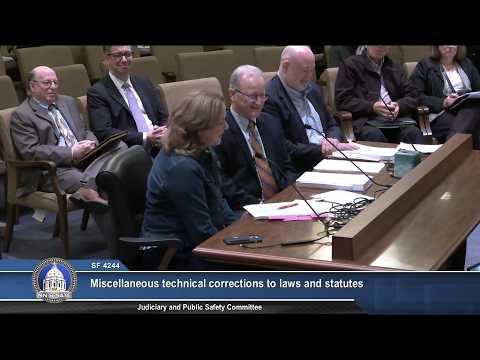
Senators on the Minnesota Senate Judiciary and Public Safety Committee on April 15 heard testimony on Senate File 45-48, a bill that would prohibit nondisclosure agreements (NDAs) for local elected officials involved in data center projects.
Sen. Hauschildt, the bill’s sponsor, said the measure would "level the playing field" for local governments by removing pressure on officials to sign NDAs that limit communications with constituents. "No community has to choose between attracting investments and being transparent with their residents," Hauschildt said, arguing the bill targets large hyperscale data centers where the scale and global nature of projects heighten transparency concerns.
Why it matters: proponents say NDAs can prevent elected officials from sharing rezoning, project and environmental information with residents until projects are too advanced for meaningful community input. Opponents, including language from a Minnesota Chamber of Commerce letter distributed to the committee, warned that confidentiality can be necessary in economic development talks to protect operational, site-selection and financial information and that an overly broad ban could deter investment, particularly in outstate regions.
Committee debate focused on the bill’s narrow scope. Sen. Holmstrom and others asked why the measure singles out data centers rather than addressing NDAs across industries; Sen. Croon and others said a uniform statewide rule can prevent individual cities from gaining an unfair advantage. Sen. Limmer, summarizing the Chamber letter, said companies commonly use confidentiality during site selection and that eliminating confidentiality could "stifle economic development when there finally is an opportunity" to bring jobs to rural areas.
Legal questions also surfaced about liability: Sen. Clark asked whether an individual official who inadvertently violated an NDA could face civil penalties and whether liability would fall on the individual or the city. Legal counsel Ms. Primo told the committee it depends on the NDA’s terms and whether the person acted within the scope of employment; some NDAs name specific individuals and could potentially expose them to contractual claims.
The bill was amended with a technical A3 amendment—adopted after Sen. Clark moved for adoption—and received a committee hearing but no final vote on passage at this meeting. Sen. Hauschildt said she is open to discussions with stakeholders about whether narrowly tailored limited NDAs could protect proprietary business information while preserving community notice and transparency.
Next steps: The committee laid the bill over for possible future action.