Senate committee advances Minnesota Foraging Act after debate over permits, rulemaking and access
Loading...
Summary
After extended testimony from tribal representatives, scientists and DNR staff, the Senate Environment committee adopted a technical amendment and referred SF 4737, the Minnesota Foraging Act, to the State and Local Government Committee; members debated permitting, rule authority and a five-year moratorium on new rules.
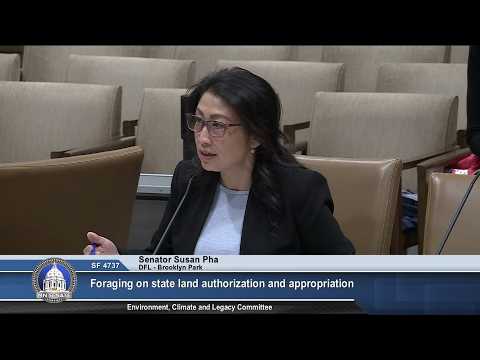
The Senate Environment, Climate and Legacy Committee voted on April 14 to send Senate File 47 37, the Minnesota Foraging Act, to the Committee on State and Local Government after a lengthy debate over access, permitting and rulemaking authority.
Senator Pa, the bill author and a task-force chair, said the legislation codifies foraging as a legitimate personal, noncommercial recreational and cultural activity on DNR-managed state lands and reflects seven recommendations from the Sustainable Foraging Task Force: recognize foraging, study impacts, improve education and training, provide clear public information, modernize permitting (including online and electronic payment), require regular stakeholder engagement, and pause major rulemaking for five years while the state collects data.
The committee adopted A2, a technical amendment that refines definitions for plants, mushrooms and fungi and makes other technical edits; the amendment was adopted by voice vote.
Supporters included Peter Martgnacco (president, Minnesota Mycological Society), Nibi Okeechida Ekwe (Minnesota Indian Affairs Council representative on the task force), Linnea Atlas Singa Bretzen (former chair, Parks and Trails Legacy Advisory Fund), David Schultz (professor and task-force member), and Greg Qualley (Backcountry Hunters & Anglers). Advocates described foraging as culturally important, a learning opportunity and a way to connect people to the outdoors. “This bill seeks to formally recognize foraging as an important recreational and cultural activity,” said Peter Martgnacco.
DNR witnesses and some members pressed for clarity on definitions, conservation protections and the fiscal costs of implementing expanded permitting, outreach, and education. Assistant Commissioner Bob Myers (DNR) urged additional tribal consultation and warned of potential conflicts: the bill both grants new rulemaking authority and includes a five-year moratorium on rulemaking, which he said could create confusion. Myers also said the fiscal note under development could run “multiple millions of dollars” for rulemaking, web resources, outreach and U of M Extension support.
Senator Green and others worried that the bill’s grant of rulemaking authority could allow the department to prohibit foraging in designated areas, set harvest limits and require permits; the senator argued that such authority could undermine the bill’s goal to expand access. The bill’s author countered that the task force and draft language require reasons and data for any restrictions and that, where restrictions are necessary, they must be justified and are intended to protect species and culturally important resources.
Matt Wopler, an assistant regional manager with DNR Forestry, described current special-product permits: they are issued infrequently (fewer than 100 per year in his account), typically when proposed harvesting would kill a plant or dig up roots, and the minimum charge is $25; DNR staff handle permit requests by phone or in person, and the agency’s current business processes limit online payment options.
After questions and extended discussion about how the bill would change access and administrative practice, the committee referred SF 4737, as amended, to the State and Local Government Committee by voice vote.