Lifetime Citizen Portal Access — AI Briefings, Alerts & Unlimited Follows
Senate committee advances omnibus agriculture finance bill but strips paraquat ban
Loading...
Summary
The Senate Agriculture committee advanced SF5073 to the Finance Committee after adopting amendments that extend meat-processing workforce grants, add reporting requirements and clarify egg-donation language; the panel removed language that would have banned paraquat dichloride.
The Senate Agriculture, Veterans, Broadband and Rural Development Committee on April 13 voted to recommend Senate File 5073, an omnibus agriculture finance bill, to the Finance Committee after adopting several amendments and removing language that would have banned the herbicide paraquat dichloride.
Chairing the session after a gavel pass, committee members first adopted a base delete-and-replace amendment (A1) and a series of technical fixes (A5, A8) before hearing testimony from farmers, advocates and agency officials. Testifier Morgan Shaffer urged support for the bill "as amended" and warned that "Paraquat Dichloride is the deadliest herbicide used in agriculture," saying drift can carry the chemical "almost 3 miles" and noting studies that have linked paraquat to Parkinson’s disease. "Viable alternatives do exist," Shaffer said, and she asked the committee to back the bill as amended.
Industry groups pushed a different message. Hunter Peterson, public policy specialist for the Minnesota Farm Bureau Federation, told senators that paraquat is a federally restricted-use pesticide handled by certified applicators and "we respectfully oppose this provision" that would restrict it. Other testifiers, including Laura Shriver of the Land Stewardship Project and Stu Lohrey of the Minnesota Farmers Union, supported program extensions in the bill, citing the importance of farmland down-payment assistance and a meat-processing "train and retain" grant program.
On amendments affecting program timelines and accountability, Senator Valerie Kunish offered the A2 amendment to extend a 2023 appropriation for meat-processing workforce development. The amendment, as adopted, keeps program caps (no individual employee may receive more than $10,000 and no single processor may receive more than $50,000) and was changed on the floor to add an annual reporting requirement from the Minnesota Department of Agriculture (A9). Kunish said grantees have obligated funds but need more time to spend them; Ashley Barrasso of MDA told the committee that only about $60,000 of the original appropriation had been reimbursed so far.
After renewed debate about the paraquat language — including questions about whether Minnesota would be the first U.S. state to restrict the product and how to handle emergency uses — Senator Holmstrom offered A6 to remove Section 5 (the paraquat language) from the A1 amendment. The committee took a roll-call on A6; the motion passed 5-4, and the paraquat ban language was removed. Senator Holmstrom noted the amendment did not eliminate the requirement that MDA report on use and that the committee would continue the conversation.
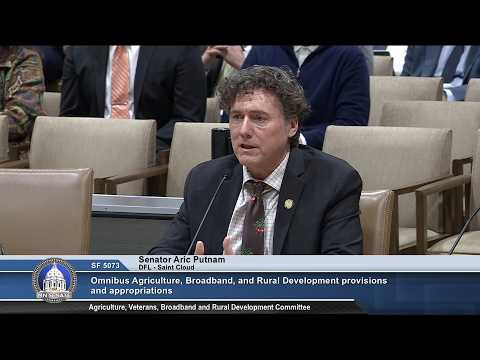
With the adopted package in place (A1 as amended, A2 with A9, and other technical amendments), Senator Putnam moved that SF5073 as amended be recommended to pass and sent to the Finance Committee; the motion carried by voice vote. The committee then adjourned.
What’s next: SF5073 will go to the Senate Finance Committee for further consideration. The committee’s actions extended grant timelines for meat-processing workforce development, preserved program caps, required MDA reporting on extended funds, clarified egg-donation language, and removed the paraquat restriction from the current amendment package.