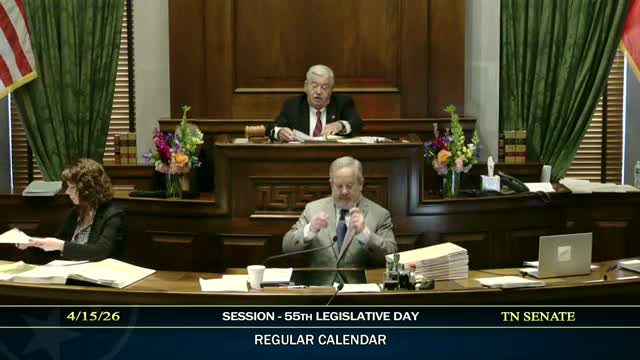
Senate approves bill expanding short-term custody extensions and creates review task force for high‑needs youth
Loading...
Summary
The Tennessee Senate on third reading passed Senate Bill 18-68, which clarifies when judges may extend Department of Children's Services custody up to an additional six months and establishes a task force to study system gaps and report recommendations by February 2027. Supporters said the measure helps judges secure needed treatment; critics warned it risks lengthening confinement without sufficient safeguards.
The Tennessee Senate passed Senate Bill 18-68 on third and final consideration after debate over whether the measure would protect children or increase the risk of extended confinement without sufficient oversight.
Sponsor Senator Wally, speaking on the floor, said the bill does two things: it creates a task force to study gaps for children who are bench-ordered into DCS custody after delinquent adjudications and it clarifies judicial sentencing direction so judges may, after a hearing, extend a child's commitment in custody for up to six additional months when evidence shows the youth needs services that can only be delivered in custody or when the youth has assaulted staff. "This task force is designed to try to get together juvenile judges, the Department of Mental Health and Substance Abuse Services, the public defenders conference and other stakeholders to come up with recommendations," Wally said, and noted the task force must submit policy recommendations to the governor and the general assembly by February 2027.
Senator Campbell offered Amendment 2, which she described as putting "clear guardrails around how long a child can remain in DCS custody," maintaining a firm six-month limit with only one possible extension and requiring full due process, a hearing, legal representation, and evidence. Campbell said the amendment also would prohibit extensions when the behavior is tied to a disability or caused by inadequate staffing or misconduct. The amendment was moved but was not seconded on the floor and was later the subject of a separate tabling motion; Senator Wally successfully moved to table Amendment 2.
Opponents warned the bill risks treating children like perpetrators and could result in more youth being funneled into incarceration. Senator Roberts said the central problem is one sentence in the committee analysis allowing extension without a separate criminal adjudication, and argued that a facility accusation could result in an automatic six-month extension with limited recourse for the child. "We're gonna take their word for it, and we're gonna let them stay there for 6 more months," Roberts said.
Senator Oliver, drawing on personal and professional experience in child-welfare work, urged caution, saying the proposal "is not the solution that we need when it comes to our most vulnerable children" and called for systemic reforms and adequate funding for DCS operations. Sponsor Wally responded that the bill is not a final solution but a step to provide judges and the system more options and improve outcomes for children who need specialized treatment.
On the third-and-final consideration vote the clerk recorded: Ayes 22, Nays 11. The clerk declared Senate Bill 18-68 passed as amended by the adopted committee amendment, and the motion to reconsider was tabled.
The bill as described on the floor: establishes a Judicial Commitment Review Task Force, clarifies grounds and procedures for a judge to extend a DCS commitment for up to six months (with hearing and due process referenced in some floor discussion), and requires a final task force report with policy recommendations to the governor and general assembly by February 2027. Because floor opponents emphasized due-process and oversight concerns, the sponsor and supporters said the measure is intended to be paired with study and further policy recommendations rather than to be a standalone solution.
Next steps: The bill passed the Senate and will be transmitted according to normal enactment procedures; the task force named in the bill would be expected to begin work under the timelines specified in the statute.