Pequannock board flags rising health‑insurance costs as $56.15 million preliminary budget is presented
Loading...
Summary
At its April 13 meeting the Pequannock Township Board reviewed a $56,147,954 preliminary 2026–27 budget, warned of steep health‑insurance increases and discussed capital and special‑education cost pressures ahead of an April 27 public hearing.
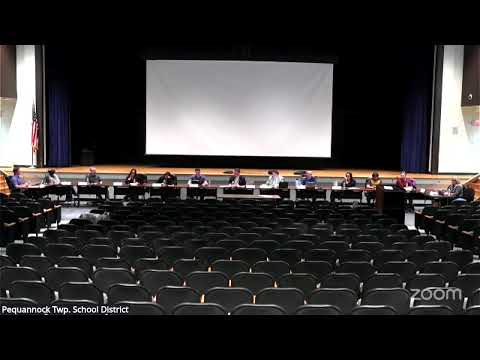
The Pequannock Township Board of Education on April 13 reviewed a preliminary 2026–27 budget totaling $56,147,954 and heard warnings from district leaders about escalating health‑insurance costs that will squeeze local finances in coming years.
Mister Gibbs, reading budget materials to the board, said, “The 02/2627 preliminary budget is in the amount of $56,147,954.” The presentation noted nonessential purchases are on hold through July 1, 2026, and that a large health‑insurance increase is a primary driver of the shortfall.
Dr. Portis, the superintendent, told the board the district had received notice of a health‑insurance increase that reduced the district’s fund balance. He also announced the district’s successful application for a recreation improvement grant: “we will be receiving $69,200” to support that project.
Why it matters: board members said the district’s fund balance is below recommended levels and that health‑care costs threaten program continuity. Mister Gibbs said the fund balance was reduced by $417,000 after a health‑insurance increase was finalized; the administration also reported a greater‑than‑$1.7 million increase in benefit costs tied to plan and contribution changes. Board members and administrators warned those recurring increases will force difficult choices about staffing, programs or tax levies in future budgets.
Details from the discussion included: the district’s use of capital reserve funds for tennis‑court renovation ($398,248) and new univents ($323,700) with an anticipated SDA reimbursement of $129,480 (total capital reserve need $721,948), a planned maintenance‑reserve drawdown ($959,029), and an increase in out‑of‑district special‑education costs of $267,548 (13.57%). Administrators said federal aid reductions and state funding changes also affect the revenue picture; one line in the packet estimated a $175,000 revenue impact tied to a 25% reduction in federal aid when compared with prior‑year adjustments.
Board members asked whether rising health costs would lead to staffing reductions, higher employee contributions, or increased local taxes. Discussion cited state statute Chapter 44 — which governs public‑employee plans and whose current contribution rules are set to expire at the end of 2027 — as a potential inflection point that could change contribution structures statewide.
What the board did: the meeting was primarily informational on the budget. The board did not vote on the final 2026–27 budget at the April 13 session; the public hearing and vote are scheduled for April 27. Administrators said they are already examining multi‑year plans and looking at efficiencies to preserve class sizes and services for students while balancing fiscal constraints.
Next steps: the board will hold a public hearing on the preliminary 2026–27 budget at the April 27 meeting. The administration said it continues planning for 2027–28 and beyond as health and benefit costs evolve.