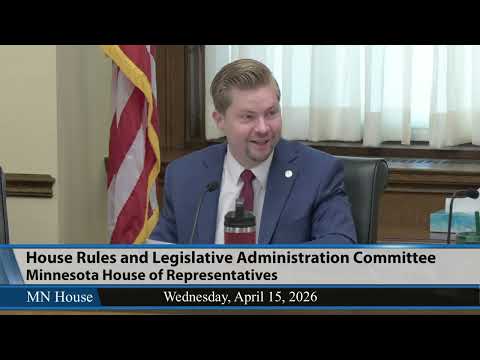
Rules committee deadlocks on resolution to investigate impeachment referrals tied to fraud allegations
Loading...
Summary
The committee considered R13A, which would set procedures for investigating impeachment resolutions involving Governor Tim Walz and Attorney General Keith Ellison (HR6 and HR7). Supporters cited whistleblowers and alleged multibillion‑dollar fraud; opponents called the move partisan. A roll call ended 8‑8 and the motion failed to advance.
The Committee on Rules and Legislative Administration considered House Resolution 13A (R13A), which would set a structure for investigating impeachment resolutions and would refer existing impeachment resolutions to the House Committee on Fraud Prevention and State Agency Oversight Policy. The resolution proposed minimum investigation standards including witness testimony, legislative subpoena power where necessary, participation rights for ranking minority members, representation for subjects, and a final report due by May 1, 2026.
Representatives Wiener (sponsoring HR6) and Davis (sponsoring HR7) urged the committee to advance investigations into Governor Tim Walz and Attorney General Keith Ellison, respectively. Wiener said the resolutions respond to “a systematic breakdown in governance” and cited sworn testimony, OLA reports and congressional testimony alleging widespread fraud in state programs. Davis alleged that the attorney general met with individuals tied to the Feeding Our Future fraud network and noted reported campaign contributions linked to that meeting; he urged the committee to review records and testimony.
Several public witnesses spoke in favor of investigation. Faye Bernstein, who identified herself as a current state employee and a whistleblower, described reporting suspected fraud beginning in 2019, alleged retaliation and personal consequences for raising concerns and asked the committee to proceed. Other testifiers—Alan Lysdall, Jody McCarthy and Nathaniel Olsen—also urged investigation and accountability.
Members split along lines of whether the committee should refer the matters for a formal investigation or focus on legislative solutions to prevent future fraud. Supporters emphasized the House’s constitutional authority and duty to investigate alleged corrupt conduct; opponents described the move as partisan and urged addressing fraud prevention bills or other policy work instead. Representative Jordan characterized the proceedings as a political stunt; Representative Schultz and others argued the allegations warranted formal inquiry.
The committee took a roll call after member debate. The clerk recorded 8 ayes and 8 nays; the chair announced, “There being 8 ayes and 8 nays, the motion does not prevail.” R13A therefore did not advance from the Rules Committee on this vote. Committee members exchanged short closing remarks and the meeting was adjourned.