Get Full Government Meeting Transcripts, Videos, & Alerts Forever!
Get email alerts on the Assessment And Lcap topic
No spam. Unsubscribe anytime.
Ocean View trustees take Smarter Balanced practice test, debate raising middle‑school climate goals
Summary
Trustees tried sample Smarter Balanced questions and spent over an hour debating proposed LCAP Goal 3 metric changes, including a push from several trustees to raise middle‑school targets for students 'knowing the rules' and 'treating each other with respect,' with administration asked to return with refined targets and student‑focused follow ups.
Trustees at the Ocean View School District on April 14 tried a live Smarter Balanced practice test and then engaged in an hour‑long discussion about proposed Local Control and Accountability Plan (LCAP) Goal 3 metrics aimed at student safety, belonging and respectful behavior.
The practical demonstration, led by Rashida Gates, the district’s director of teaching and learning, and IT director Sam Plambach, walked board members through a grade‑4 math computer adaptive item, a grade‑6 English passage and an eighth‑grade algebra question to show how students encounter multiple‑choice, short‑answer and performance Task items and how the adaptive algorithm adjusts difficulty.
"This test is computer adaptive," Gates said during the demonstration, adding that "when students get a question right, the next question can be slightly more difficult," a point she said parents should know when students report a test was "very hard." Gates also emphasized that students with Individualized Education Programs receive testing accommodations built into the system.
Why it matters: the Smarter Balanced assessments inform instruction, placement and district accountability. Gates told the board the spring 2026 window opens April 20 and described interim assessment blocks used to prepare students. Superintendent Julianne Hofer said the board’s live walkthrough would be edited and shared with families so they can see testing rigor and be better prepared.
The bulk of trustee discussion followed Hofer’s presentation on LCAP Goal 3, which focuses on safe, welcoming schools and stronger family engagement. Hofer said the district collected 1,032 responses from 5,493 distributed survey tokens (about 19 percent) and outlined current targets including a 97 percent attendance goal and a chronic absenteeism target below 5 percent.
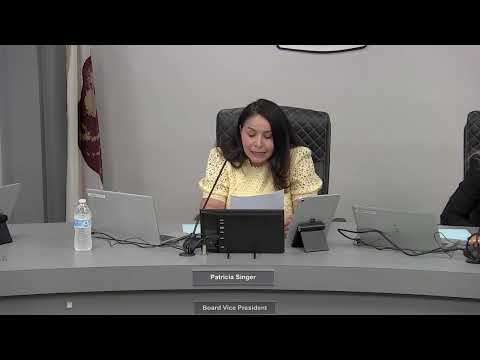
Trustees, however, spent the most time on student climate survey measures for middle schools such as "do students at your school know the rules?" and "do students treat each other with respect?" Several trustees criticized the targets as too low. "If we're willing to live with 49% or 59% ... then we can't say to students we expect them to be kind," Trustee Singer said during debate. Another trustee proposed a higher aspirational target, suggesting the board set a 90 percent standard for multiple climate metrics.
Board members raised methodological questions as well: some trustees noted that the way students interpret the survey prompts could drive low scores — for example, a student asked whether "others know the rules" may respond based on peers' behavior rather than their own knowledge — and recommended that teachers explain survey wording to students before administration.
Hofer said the district can adjust targets and/or clarify question wording, noting the state requires a climate survey but does not dictate specific questions. "We can revise the wording inward — it's just a reset," she said, offering to return to the board with more detailed trend data at a May 12 presentation and to bring the LCAP to public hearing June 9 and final approval June 23.
What’s next: the board directed staff to dig into longitudinal data, meet with middle‑school students to understand why perceptions are low, and consider raising the middle‑school metric targets; administration said it will return with recommendations and more granular evidence at the May 12 meeting.
At the close of the discussion, Hofer thanked teachers and staff for preparation and said the district will continue to encourage attendance and family engagement as complementary strategies to improve outcomes.