Get Full Government Meeting Transcripts, Videos, & Alerts Forever!
Get email alerts on the Zoning Variance topic
No spam. Unsubscribe anytime.
Dorchester County Board of Zoning Appeals denies variance for Whitehall Road accessory building
Summary
The Dorchester County Board of Zoning Appeals voted to deny a variance request from William Allen Dixon to expand an accessory building at 5528 Whitehall Road, finding the application failed to meet critical-area and general variance standards; planning staff recommended denial and said mitigation or vertical expansion were feasible alternatives.
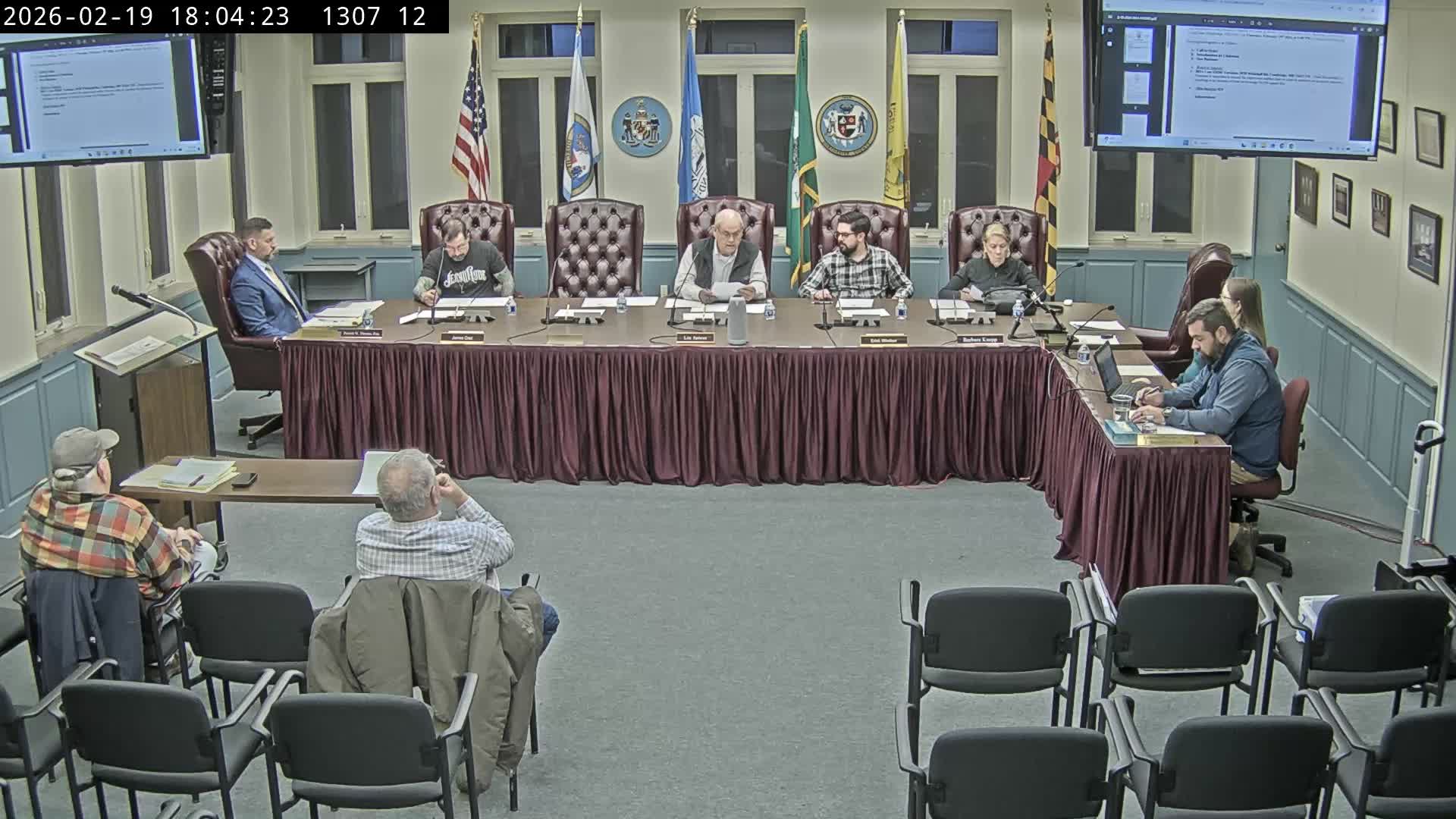
The Dorchester County Board of Zoning Appeals on Feb. 11 denied a variance request that would have allowed a larger accessory building at 5528 Whitehall Road in Cambridge.
Chair Len Spicer opened the hearing and read the board’s procedures before planning staff summarized the application: the owner sought to replace a 1,010-square-foot accessory structure with a proposed 1,664-square-foot building — a net increase of roughly 654 square feet that would raise total lot coverage to about 6,831 square feet, beyond the county’s allowed coverage under the critical-area rules. Planning staff recommended denial, saying the applicant had not met the legal standards for a critical-area variance.
The board’s planner and critical-area office described three avoidance or mitigation options they considered: keep any new building within the existing footprint (for example, by building two stories), relocate the structure onto the existing parking pad so there is no net increase in impervious surface, or provide a mitigation plan if the variance were granted. Planning staff noted that a mitigation plan would need to offset permanent disturbances at a 3-to-1 ratio under Dorchester County code §68-16.
Tim Marshall, who said he represented the applicant, told the board the existing concrete driveway is a longtime feature and that placing a larger building elsewhere would require breaking up that surface and backfilling. Owner William Allen Dixon testified that he recently inherited the house after his mother’s death and needs additional storage while clearing the residence. “That’s all I’m asking for is that little bit increase in size to accommodate my needs,” Dixon said, explaining he picked a modest enlargement to preserve the driveway and the property’s appearance.
Board members pressed whether the need for storage met the statutory definition of an “unwarranted hardship.” The board’s legal discussion cited the critical-area law and the burden of proof, noting the applicant must satisfy every statutory criterion for a variance. Planning staff emphasized that many nearby lots show higher impervious coverage on aerial photos but the office could not confirm at the hearing whether those overages were permitted or resulted from prior variances.
After discussion, a board member moved to deny the variance for Case No. 2820, and another seconded. The motion to deny — on the grounds that the application did not meet all variance criteria, including the requirements of the county’s critical-area program — carried on a voice vote. The board chair said the applicant would receive the written decision by mail and that the 30-day appeal period would begin upon receipt.
The board’s action preserves the existing critical-area lot-coverage limits; the decision noted that alternatives (vertical expansion or relocating the new structure onto existing impervious surface) remain available to the property owner without increasing lot coverage. The meeting adjourned following the vote.