Lifetime Citizen Portal Access — AI Briefings, Alerts & Unlimited Follows
Providers warn EIDBI caps and surety-bond rules could reduce services for high‑need children
Loading...
Summary
Multiple EIDBI providers and associations urged the committee to delay or revise proposed billing limits and new surety-bond/financial-capacity rules, saying caps presented with little notice risk reducing individualized care and that 90‑day reserve or large surety bonds could force community providers to close.
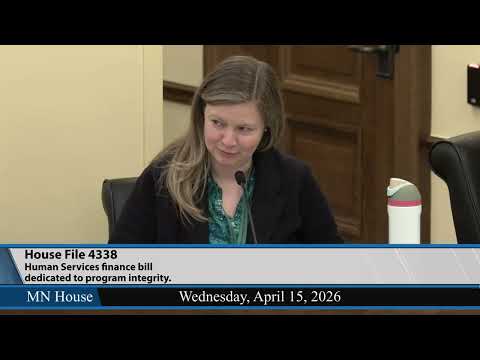
Several provider witnesses told the House Human Services Finance and Policy Committee the program-integrity omnibus contains provisions that, if enacted as written, risk reducing access to Early Intensive Developmental and Behavioral Interventions (EIDBI) and other long-term supports.
What witnesses said: Dr. Eric Larson, chair of the Autism Treatment Association of Minnesota, told members the EIDBI statute already contains multiple safeguards (state medical‑review team authorization, comprehensive multidisciplinary evaluation and six-month authorization cycles) and said "by putting a brick wall in the way of services to the most challenging children, the state does not surveil for fraud, but instead creates the risk of high long term costs." He asked the committee to delay deliberation on billing limits introduced to the committee last week.
Provider finance concerns: Jen Diederich, chief compliance officer at MAC Midwest, said proposed surety-bond requirements (testified in the hearing as at least $100,000 or 10% of annual Medicaid revenue) plus a 90-day cash-reserve revalidation requirement are "not realistic and ... will destabilize the provider system and reduce access to EIDBI services." She provided examples of large receivables and delayed reimbursements already straining nonprofit providers.
Billing-code detail and member follow-up: Representative Hicks focused questioning on an ITP (individualized treatment-planning) billing code that providers currently bill as an "encounter" (which can be used across short or long durations). Dr. Larson explained weekly treatment-team review practices and that multiple team members may bill for their contributions; members cited a proposed example rate of about $94.80 and a 300‑unit annual limit discussed in committee, raising concerns that a hard cap could prevent medically necessary services.
Why it matters: EIDBI services are tailored to children’s changing needs; witnesses argued that encounter-style billing and frequent plan reviews allow individualized adjustments that a simple unit cap could undermine — particularly for the most intensive cases where children sometimes need more than 40 hours per week of 1:1 support.
Committee response: Members acknowledged the balance between program integrity and access, asked technical questions about how codes are authorized and billed, and signaled openness to prior authorization exceptions for documented medical necessity. Staff and members requested additional fiscal and implementation information before markup.
What’s next: The committee requested follow-up on authorization rules for affected billing codes, the feasibility of prior-authorization exceptions for high‑need recipients, and examination of alternative approaches to achieve program integrity without destabilizing providers.