Get Full Government Meeting Transcripts, Videos, & Alerts Forever!
Get email alerts on the County Cost Share Relief topic
No spam. Unsubscribe anytime.
Bill to Waive Cost Shares for ‘Economically Distressed’ Counties Advances from Committee
Summary
House File 44-21, sponsored by Representative Duran, would exempt counties meeting two strict criteria from certain state-mandated cost-sharing requirements. Testimony from Beltrami County officials described severe local fiscal pressures; the committee re‑referred the amended bill to Taxes.
Representative Duran asked the Human Services Finance and Policy Committee to advance House File 44-21, a bill that would provide relief from county cost-share obligations for counties defined as "economically distressed." The author moved and the committee adopted an A1 amendment removing Section 3 to narrow the committee stops and allow further work before the bill proceeds.
The bill, as outlined by Representative Duran, would treat an "economically distressed county" as meeting two criteria: more than 50% of its population living in poverty and at least 70% of its acreage exempt from property tax under chapter 272. Duran said the measure is intended to prevent counties with unusually small tax bases from being penalized for circumstances beyond their control.
Beltrami County officials testified in favor. Anne Linseth, Beltrami County health and human services director, said the county faces unusually high demand for publicly funded services: "We have more than double the state average of people receiving medical assistance — almost 40% of our population," and she urged waiving cost shares for state hospital costs and the behavioral health fund to preserve local service capacity. Tom Berry, Beltrami County administrator, emphasized the county’s limited tax base: "We're the third largest county in the state of Minnesota, yet only 24% of our geographic area is taxable," and outlined recent local fiscal strains including a financed jail project, early landfill closure costs and service reductions.
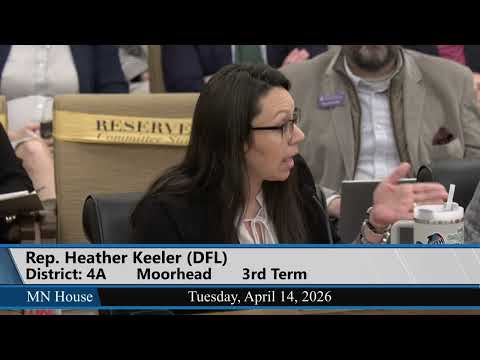
Members asked about how many counties would meet the bill's thresholds; Representative Duran and county witnesses estimated 2–3 counties (cited examples included Beltrami, Mahnomen and Clearwater). Committee members pressed on federal policy impacts driving local costs and asked for cost specifics; county witnesses said Beltrami’s average behavioral health fund expense is about $160,000 annually and that direct care/treatment costs for MSOP‑type services averaged roughly $974,000 over the last five years (witnesses framed those as multi‑year averages).
After discussion, the author renewed the motion that HF 44-21 as amended be re‑referred to the committee on taxes. The motion passed by voice vote (the committee recorded one 'no' during the roll). The re‑referral sends the bill for further review and potential tax‑committee work.