Get Full Government Meeting Transcripts, Videos, & Alerts Forever!
Get email alerts on the Board Governance topic
No spam. Unsubscribe anytime.
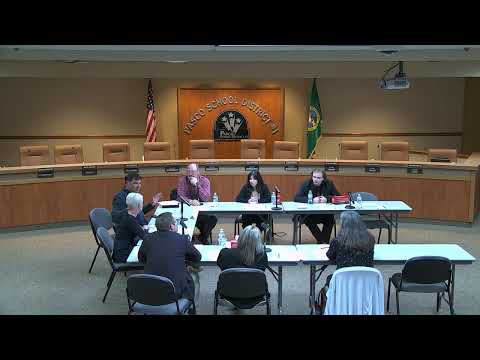
Pasco board hears balanced-governance briefing, keeps consultant support for superintendent evaluation
Summary
Consultant Dr. Thomas Alsbury briefed the Pasco School Board on the evidence-based 'balanced governance' model and the five-step superintendent-evaluation cycle; the board signaled support for keeping an hourly consulting option and agreed on a timeline that targets June 30 delivery of the final evaluation.
Consultant Thomas Alsbury told the Pasco School Board at a retreat study session that 'balanced governance' — a research-based approach he helped develop — centers board oversight on student learning and measurable goals rather than operational detail or political advocacy. 'The boards that stay in that lane are the ones that are the most effective,' Alsbury said, summarizing the model's emphasis on informed oversight.
The board spent much of the session discussing how to use the model for its annual superintendent evaluation. Alsbury walked trustees through the five-step evaluation cycle and how the board can select a limited number of strategic performance targets for focused review. He described a two-stage ratings process that compiles anonymous growth recommendations from each board member and then asks trustees to rate and narrow those recommendations to a manageable set of priorities.
Superintendent Whitney and several directors discussed timing and contract options for outside support. Several trustees said periodic refreshers or onboarding for new members would be useful; others warned about costs. The board indicated a majority preference to retain access to Alsbury’s services on an hourly/consulting basis for targeted tasks such as onboarding and to continue using a third party to compile anonymous growth recommendations for the superintendent evaluation. Alsbury noted the district could also perform many steps internally but recommended an outside party for anonymizing and distilling qualitative feedback.
Alsbury walked the board through practical calendar choices: the board had earlier identified performance indicators from a longer list and narrowed them for focused evaluation; Alsbury recommended starting evidence collection and the rating process in April if the board wishes to deliver a final evaluation by June 30. He emphasized allowing the superintendent time to prepare if new goals are chosen earlier in the year.
Board members said they will debrief after the evaluation cycle and decide whether to continue with the same consulting arrangement or shift more work in-house. No formal vote was taken during the retreat; trustees agreed to proceed with the evaluation timeline outlined and to keep the hourly consulting option available.
The board recessed to an executive session at the end of the public retreat.
The board is scheduled to receive final evaluation materials under the June timeline discussed; further steps and any contract changes will appear on a future public agenda.