Lifetime Citizen Portal Access — AI Briefings, Alerts & Unlimited Follows
Southern Columbia committee to list 3% proposed millage for public notice
Loading...
Summary
At a facilities and finance committee meeting, district finance staff recommended placing a proposed 3% millage increase on next Monday’s agenda to close a projected deficit and fund capital and maintenance needs; the committee signaled agreement to use 3% as the public-notice figure while continuing discussions about transportation and other cuts.
The Southern Columbia Area School District facilities and finance committee agreed to put a proposed 3% millage increase on next Monday’s agenda for public notice and further debate, district finance staff said. The staff presenter recommended 3% as a middle-ground starting point: “I— I were recommending a 3% simply because it's middle ground and it's just a target,” the finance presenter said.
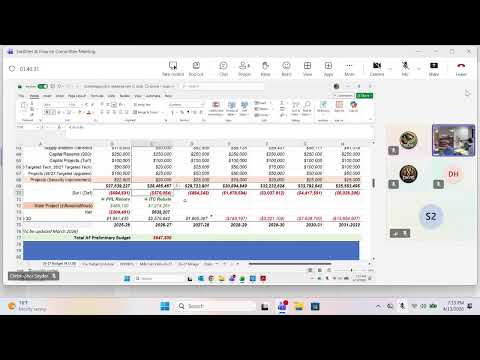
The committee said the proposed number is a procedural step required to start the 30-day notice process that leads to a final adoption; it is not a final vote. The presenter explained that a 3% increase is estimated to generate about $315,000 in local revenue and illustrated parcel-level impacts (median parcel increase roughly $51 at 3%). He emphasized the district needs to weigh that revenue against a projected operational deficit and several capital needs.
Why it matters: the district is projecting a near-term deficit (the presenter cited a modeled deficit of about $891,993 under a no‑increase scenario) while also facing ongoing capital and maintenance obligations, roughly $2,000,000 a year in debt service and long-term pension costs. The presenter said the district has an investment tax credit receivable of $1,214,000 from a completed solar project booked as revenue under government accounting standards but not yet received in cash; that receivable will affect fund balance timing but cannot be relied on as immediate cash.
Committee discussion focused on trade-offs and alternatives. Several members urged maximizing the public-notice number to preserve future options; others warned that regularly maximizing the index can encourage raising taxes when revenue is uncertain. Transportation costs and a pending VOTEC (VoTech) proposal also figured in the debate: staff said an adjusted VOTEC budget currently shows $1,038,005 in the district's line and that a VOTEC transportation proposal could shift about $35,000 in local costs. On cyber-charter costs, staff noted the district currently pays $12,260.49 for a non–special-education student and $23,172.33 for a special-education student attending external cyber providers, while the district's own SoCo cyber program averages about $1,000 per enrolled student (varies by course load).
Board members raised longer-term concerns about the state's Act 1 index and structural funding limits, arguing that reduced state flexibility and growing mandatory costs (pensions, health care, contractual wages) make multi-year planning difficult. One committee member said the state's rules effectively force short-term tax decisions rather than allowing districts to bank modest increases for future uncertainty. Staff noted the budget process still allows the board to change the proposed number before final adoption; the proposal placed on next Monday's agenda will be the public-notice figure that appears in local papers.
What happens next: the committee signaled consensus to place a 3% proposed millage increase on next Monday's agenda for public notice. That action starts a 30-day period before the final adoption vote; the board can amend the number between the proposed and final votes. The finance presenter said audit documentation and a finalized resolution reallocating leftover general-obligation bond funds to district capital needs will also appear on the agenda.