Get Full Government Meeting Transcripts, Videos, & Alerts Forever!
Get email alerts on the Ethics Conflict topic
No spam. Unsubscribe anytime.
Resident alleges appearance of conflict after appointee’s company received CDBG funds
Summary
At the March 18 Allentown City Council meeting, resident Betty Coller said the recent appointment of Ms. Bender raises the appearance of a conflict because Bender’s company reportedly received a $1,000,000 CDBG award; council counsel replied the relationship was disclosed and the council member recused from the nomination.
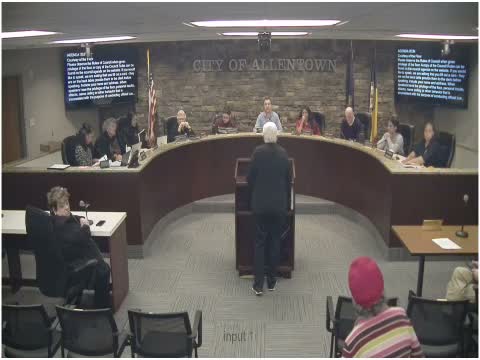
Betty Coller, a city resident, used the courtesy-of-the-floor period to raise concerns about the appointment of a board member and the public record surrounding a Community Development Block Grant award.
"Her company, Ripple Community, received a $1,000,000 grant from the city's CDBG in November 2023, and that wasn't brought up," Coller said, urging the council to disclose the connection and noting the "appearance of impropriety." She added that, in her view, the conflict stemmed from the appointee’s immediate family relationship to a council member and the company’s receipt of municipal funds.
Coller also alleged the mayor has retaliated against critics and said prior complaints and lawsuits have cost the city taxpayer money. "This is a mayor that retaliates..." she said, linking recent personnel actions and firings to a pattern of retaliation and calling for public records and disclosures to be made available.
Council counsel responded during the meeting that the familial relationship and the nomination were disclosed at the subcommittee level and that the council member recused himself from the nomination, noting the recusal was recorded in committee discussion.
Why it matters: The allegation centers on public trust and statutory disclosure requirements for municipal appointments and grant awards. Coller said the Pennsylvania ethics code can void transactions if conflicts are not properly disclosed and recommended that any complaint to the Pennsylvania Ethics Commission be considered as an enforcement path.
What the council did next: No formal motion or policy action on the allegation was taken during the meeting; counsel said the disclosure and recusal occurred at the committee stage. The council continued with its agenda.
The meeting record shows the concern was raised during public comment (courtesy of the floor) and counsel's explanation that committee-level disclosure and recusal had occurred. The matter could be the subject of a later formal complaint or record request.