City officials present concepts to redevelop Burke Lakefront Airport, say proposals could raise on‑site tax revenue
Loading...
Summary
Administration presented two conceptual ‘‘fit’’ studies for redeveloping 450 acres at Burke Lakefront Airport that aim to increase public access and generate more direct tax revenue; council members requested detailed cost, safety, housing and financing analyses and emphasized no closure legislation is before the council.
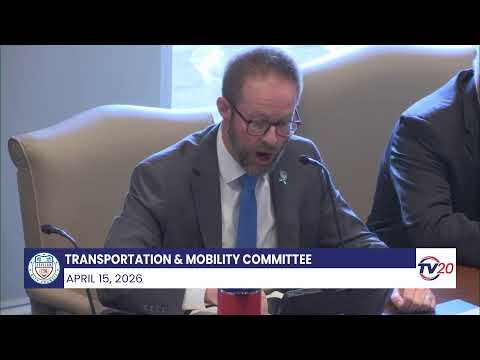
At a Cleveland City Council Transportation & Mobility Committee meeting, city officials and representatives of the North Coast Waterfront Development Corporation outlined conceptual plans for redeveloping Burke Lakefront Airport and said the preferred, recreation‑focused options would increase public access and could generate several times the airport’s current direct tax revenue.
Deputy Chief of Staff Jessica Trevissano told the committee the conceptual studies are “meant to provide ... a clear fact‑based understanding of the legal, financial, operational, and market realities associated with Burke Lakefront Airport,” and emphasized they are not master plans or binding proposals. The administration presented two hypothetical ‘‘fit’’ concepts that trade off mixes of privately financed uses — including a marina and boardwalk, an RV resort, competitive youth‑sports facilities, a large public park or an alternative 18‑hole public golf course, trails and a small vertiport — across roughly 450 acres of city‑controlled lakefront.
The administration’s economic analysis for the two conceptual fits restricted calculations to activity on the Burke site itself: it reported a one‑time economic impact in the $600–$800 million range, roughly $2.5 million in direct annual tax revenue on site (about five times the airport’s current direct tax receipts), an estimated 3,000 construction jobs and roughly 170 permanent full‑time jobs to operate site uses. “A recreation‑focused concept at Burke Lakefront Airport would require minimal public funding,” Trevissano said, adding the studies show “it would generate 5 times more direct tax revenue to the city every year than Burke Lakefront Airport currently generates.”
Officials said the concepts were developed to test which uses could meet three stated principles: (1) substantially improve public access to the lakefront, (2) drive economic impact that benefits downtown and the broader city, and (3) be financially viable with private capital or limited public subsidy. The team noted many uses shown in slides are already financed privately in other markets, though they acknowledged project‑level financing structures vary and that some comparable projects have public‑private partnership elements or incentives.
Administration representatives said the Cleveland Air Show could continue if Burke closed. Jason Russell and Tom McNair said most show aircraft already stage from Hopkins and that ticketed viewing could be arranged on a redeveloped Burke or the show could operate from remote sites; they said they have sought meetings with air‑show producers to resolve operational and economic issues.
Council members repeatedly pressed the administration for more specific numbers and follow‑up analysis. Committee members asked how much of Burke’s current ~$500,000 in direct annual tax revenue (the administration said much of that is parking‑related) would be retained after closure; Trevissano cited the ESI study (2024) and said that study assumed about half could be retained or relocated, and that many airport operations could move to Cleveland Hopkins Airport. Council members also asked for updated demolition estimates, the projected cost of the concepts (administration offered a preliminary construction estimate near $600 million and said most construction costs would be privately financed), and a clearer accounting of any potential net cost to the city’s general fund.
Members raised additional concerns about safety and operations on a densely programmed lakefront site, dredge‑management and confined disposal facility (CDF) capacity (administration said two CDFs reach capacity in 2029 and that the Port’s CHEERS project is planned to absorb future dredge), environmental due diligence (administration said tens of thousands of pages of assessments exist and many parcels have No‑Further‑Action letters for specific uses), and the pace at which choices made now could close off future options. One council member insisted any legislative steps must come to council: there is currently no closure legislation before the body, the administration acknowledged it is lobbying federal officials for closure authority, and the city described three legal pathways to closure — waiting for FAA grant obligations to end in 2039, obtaining FAA net‑benefit approval, or securing congressional authorization.
Several members pressed for housing to be prioritized; administration officials said substantial vertical housing development on Burke faces legal (submerged‑land leases), engineering and market constraints and would likely take a phased, long‑term approach, while housing and affordability commitments are being advanced in parallel for the stadium site master‑plan effort. The administration offered to provide ward‑level survey results, case studies on financing comparable facilities, and more detailed Hopkins capacity and relocation analysis.
Public comment included map and connectivity suggestions for shoreline protection and circulation, and speakers urged deeper resident engagement and clarity on who would benefit from redevelopment. The committee chair closed by reiterating no formal action or legislation is pending at this time and that additional hearings — including briefings with potential operators and more detailed materials — are likely over the summer.
What’s next: the administration said it would continue community outreach, meet with the air‑show producers and the federal delegation, and that a formal master‑planning process would begin only after the council and federal authorization (if any) are clear. The administration offered to deliver follow‑up materials requested by council, including the ESI study, survey breakdowns, demolition cost updates and case studies of financing models.