Get Full Government Meeting Transcripts, Videos, & Alerts Forever!
Get email alerts on the Education Performance topic
No spam. Unsubscribe anytime.
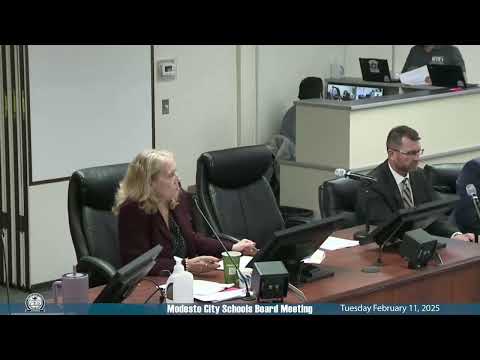
Modesto board hears midyear review: 26 Energy Star schools, literacy gains and falling dropouts amid math concerns
Summary
At the Feb. 11 board meeting Modesto City Schools reported 26 Energy Star‑certified buildings, improved literacy benchmarks and a drop in suspensions and dropouts, while trustees pressed staff on lagging 7–12 math results and budget uncertainty tied to the governor’s proposal.
The Modesto City Schools Board of Trustees received a midyear progress report on Feb. 11 that highlighted districtwide gains in several areas — 26 buildings recently earned Energy Star certification, literacy measures have improved at many grade levels, and suspension and dropout rates have declined — even as trustees raised concerns about math performance at the 7–12 level and state budget risks.
Superintendent Dr. Noguchi opened the review by framing the work as long‑term and organizationally sustained, saying systemic change "doesn't happen overnight" and praising staff for aligning goals to the district’s LCAP. The district presented a networked accountability approach in which central office teams report progress on measurable KPIs and next steps.
Why it matters: district leaders tied instructional and operational improvements to student outcomes and cost pressures. Tim Zirley, associate superintendent for business services, told trustees the governor’s proposed 2025‑26 budget includes a 2.43% COLA but also carries risks — including an estimate the proposal "could under‑appropriate the current year 2024‑25 minimum guarantee by $1.6 billion" — and reminded the board that some pandemic‑era federal funds (ESSER) have expired, leaving positions funded on a one‑time basis that will need ongoing funding or reductions.
Key findings and figures presented:
- Energy Star: The district honored 26 schools that met Energy Star building certification (top 25% nationally) and recognized the district’s multi‑year sustainability work.
- Early literacy and benchmarks: For grades 3–6, presenters reported recent midyear improvements (a cited baseline of roughly 31% meeting or exceeding standards in ELA for the cohort discussed); the district highlighted interventions such as DIBELS, Heggerty and added certificated math support teachers at 12 sites.
- Math performance: Trustees repeatedly expressed alarm that math proficiency remains well below ELA — the presentation cited 23% meeting standards in math (grades 3–6) — and staff explained that the district increased benchmark rigor this year to align with CAASPP expectations. Dr. Sarah Olsen and other instructional leaders said the change in rigor depressed some year‑over‑year comparisons and described plans for co‑teaching professional development, targeted instructional cycles and a planned math summit in April to coordinate junior‑high and high‑school strategies.
- Dropout and suspension trends: Amanda Schroyer reported long‑term gains on graduation and dropout prevention: the district’s dropout rate fell from 7.7% in 2018 to 1.8% in 2024; there were 34 dropouts reported so far in the current year. Dave Hauck reported year‑over‑year drops in suspension rates for many grade bands and noted some schools have attendance above district goals (Franklin Elementary cited at about 97.1% attendance; districtwide attendance reported at 92.9%).
- Retention and staffing: Ballen Farris described improved new‑hire retention metrics, including strong retention among instructional paras and autism paras, and outlined steps to strengthen onboarding and exit data collection.
Trustees’ reaction and next steps: Board members generally praised the progress but pressed for clearer cause‑and‑effect reporting (what specific actions led to retention or achievement gains) and asked staff to track how early elementary gains carry forward into secondary grades. Trustees also asked for written follow‑up on professional development for co‑teaching and additional detail about plans the district will use at the April math summit. Zirley said the district will incorporate the governor’s May revision into subsequent interim reports and that a public hearing on the 2025‑26 LCAP and proposed budget is scheduled for June.
The midyear review combined operational, instructional and facility updates; district leaders emphasized continued monitoring, additional professional development, and a multiyear approach to addressing lagging math outcomes.