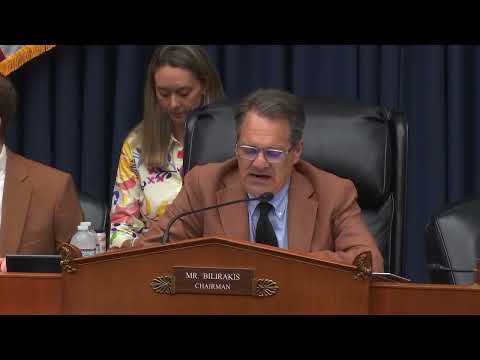
House Energy and Commerce chair warns U.S. risks losing lead in semiconductors
Loading...
Summary
The chair of the House Committee on Energy and Commerce opened a hearing on the semiconductor ecosystem, saying U.S. manufacturing capacity has fallen more than 25% since 1990 and warning that China’s state-backed expansion and an AI-driven surge in demand pose strategic risks.
The chair of the House Committee on Energy and Commerce opened a hearing on the state of the semiconductor ecosystem, saying the United States’ position in chip manufacturing is at risk and outlining the scope of the committee’s review. "Chips are critical components to today's society and are essential to our national and economic security," the chair said, welcoming witnesses and attendees.
The chair framed semiconductors broadly—"logic and memory, leading edge and legacy"—and said each type plays "indispensable functions across the economy." He warned that "American semiconductor manufacturing capacity has declined over 25% since 1990," and said that adversaries, "particularly China, are actively seeking to unseat us from global leadership and disrupt our supply chains," citing state subsidies and China’s position in certain critical materials.
On demand-side changes, the chair said artificial intelligence is a central driver of semiconductor markets and economic growth. "AI applications are among the most critical use cases of semiconductors in today's society," he said, adding that AI accounts for more than half of total semiconductor revenue. He cited estimates of roughly $500 billion in industry revenue this year and about $1 trillion by 2030, and noted the committee must consider how that demand reshapes supply chains and national competitiveness (the transcript contained a formatting error on the latter figure).
The chair said Congress and the executive branch have already taken steps — including actions involving this committee — to bolster U.S. semiconductor leadership. The hearing, he said, will examine those efforts and consider what additional policy and legislative actions may be necessary. He closed by thanking the witnesses and yielding back.
The hearing proceeded to witness testimony and questioning after the opening statement.