Syracuse council presses for clearer SURA staffing, funding breakdowns as FY27 budget is reviewed
Loading...
Summary
Syracuse City officials reviewed the SURA FY27 budget, seeking clearer department-level staff and funding detail; Commissioner of Finance Diane Mastry said SURA is a public benefit corporation that budgets 88 full-time and 13 part-time roles for FY27 and that some positions are grant-funded.
Syracuse City Council members spent the meeting pressing staff for clearer department-level detail on the Syracuse Urban Renewal Agency (SURA) FY27 budget, raising questions about how SURA-funded positions are counted and which roles rely on grant dollars.
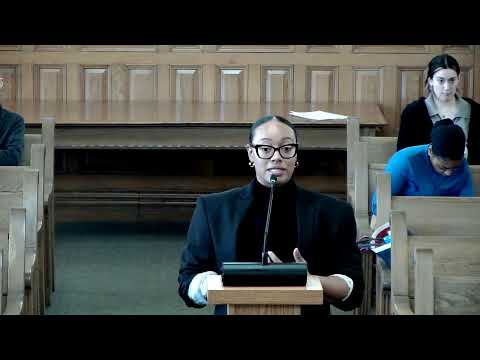
"I'm Diane Mastry. I'm the commissioner of finance for the city of Syracuse," Mastry said in opening remarks, adding that SURA is a public benefit corporation established in 1962 that "allows the city to deliver housing and redevelopment initiatives with greater flexibility." She said SURA is governed by a three-member board made up of the mayor, the president of the common council and the commissioner of finance.
Mastry told the council that, in the FY27 budget, SURA is budgeting "88 full time employees or roles and 13 part time" positions, and that five part-time roles are currently shown as vacant. Councilors pressed staff to clarify apparent year-to-year changes: staff said FY26 showed 108 positions and FY27 shows 101 in a different rollup, and that some items marked "eliminated" reflect timing, funding shifts or moves across departments rather than permanent eliminations.
Councilors and staff discussed specific line items. Staff said some police cadet posts were not expected to be filled in calendar year 2026; Mastry said cadet positions had been budgeted at "a little over $27,000 each," and another participant observed 14 such positions were listed as eliminated, producing a rough savings estimate discussed in the meeting of about $340,000.
Several councilors requested a clearer, department-by-department breakout of which positions are funded through the city general fund versus external sources. Staff explained many SURA employees perform work inside other city departments and appear on department lines (staff referenced line 541700 as an example), which complicates a single-sheet headcount. Mastry said the analysis tying SURA activity to the city budget was not included in the packet and that she would follow up because of variances she could not yet explain.
Councilors also asked whether positions shown as "new" were truly new roles. Staff said some roles listed as new had been unfilled in the prior year but are existing positions being posted now; others are grant-funded, including one-year positions that expire with the grant term.
On funding sources, staff and Mastry listed recurring federal grants and other streams that support many roles: Community Development Block Grant (CDBG), Emergency Solutions Grant (ESG), HOME, a five-year Lead grant, opioid settlement funds, and administrative draws from SEDCO, SIDA and the Housing Strategies Corporation. Staff said CDBG/ESG/HOME allocations were confirmed for the following year and described opioid funding as multi-year but variable in amount.
The council did not take a recorded roll-call vote on any ordinance or budget adoption during this session. A motion to adjourn closed the hearing.
The council asked staff to provide a clearer staff-by-department breakdown, updated position status for roles shown as "eliminated" or "new," and the missing FY analysis that ties SURA activity to the city budget.