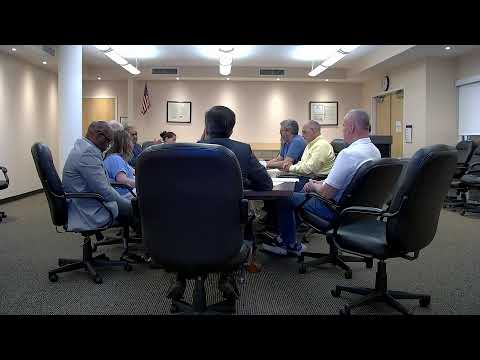
District reviews school‑district insurance options with NYSER representative
Loading...
Summary
NYSER (a nonprofit reciprocal for New York K–12 districts) briefed the Port Washington Audit Committee on coverages, including blanket property limits, FEMA commercial flood policies per building, cyber endorsements and supplemental cyber coverage. Committee members asked about exclusions and next steps on cyber limits.
Adriana Melidas, marketing manager for NYSER, told the Audit Committee that NYSER is a nonprofit reciprocal formed to provide stable, K–12-focused insurance coverage and risk-management services for participating New York school districts.
“NYSER... was formed,” Melidas said, “to provide stable insurance coverage as well as risk management services, to help districts mitigate losses.” She described the management-company model that supports underwriting and policy administration for about 340 members statewide and explained that members can select some limits (for example, umbrella/excess limits) while core general-liability per‑occurrence and aggregate features are broadly available to members.
Melidas flagged three areas of note for the Port Washington district’s packet: the district’s total insured value (presented in the packet as $445,000,000), flood coverage placed through Wright/NFIP commercial policies at $500,000 building and $500,000 contents per building (no aggregate), and two cyber-related items: a $250,000 cyber endorsement included at no charge with an option to increase limits up to $1,000,000, and a supplemental cyber policy placed through Gallagher with Crown & Forster providing a $3,000,000 limit.
Committee members asked about material exclusions (earthquake and excess flood were identified as gaps NYSER cannot uniformly provide for Long Island) and how NYSER funds claims. Melidas said the reciprocal is funded by member premiums and reserves set and maintained with actuarial support. She also emphasized NYSER’s risk-management services—contract review, certificate-of-insurance review and annual onsite risk specialists—that the district can use to reduce exposure.
The committee did not adopt new coverages at the meeting. Members requested follow-up information on cyber-limit options and confirmed there is no immediate recommendation to reduce coverage. The committee intends to include insurance considerations when planning future audit or policy work.