Get Full Government Meeting Transcripts, Videos, & Alerts Forever!
Get email alerts on the Eviction topic
No spam. Unsubscribe anytime.
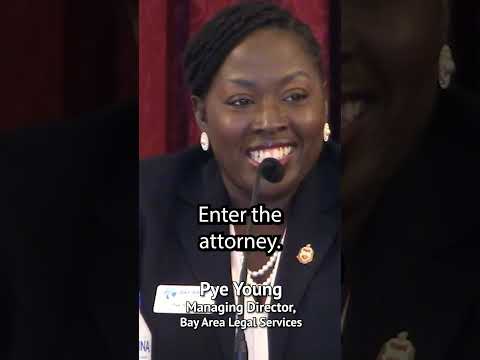
Staff member says advocacy helped veteran avoid eviction from mobile home
Summary
A staff member described how legal advocates intervened after a veteran's eviction stemmed from fines and unpaid lot rent; the presenter said investigators and negotiations allowed repairs and preserved the veteran's housing.
A staff member described how legal advocates helped a veteran avoid eviction after fines tied to unrepaired damage and unpaid lot rent put the tenant at risk.
The presenter said the eviction did not start as a straightforward nonpayment case: the mobile home's owner charged fines for damage that had not been repaired, the veteran fell behind on lot rent and "it kind of was cumulative." The staff member said the veteran had received money to repair damage, "paid a contractor to repair the damage, and the contractor took the money and never did the work." The presenter added, "So here is a veteran in crisis mode." (Staff member, S1.)
Why it matters: The account illustrates how nonpayment evictions can mask other issues—contractor fraud and fee-based enforcement in mobile home parks—that leave tenants without housing. According to the presenter, advocates used negotiation and outside inquiry to secure housing stability for the client.
The staff member said advocates "were able to notify the Sheriff's department to make a few phone calls and do some investigation," and that the intervention changed the tone of discussions with the mobile home park. The presenter described negotiating additional time with the park, getting the contractor to complete repairs, and helping the veteran remain in their unit: "He was able to get his mobile home unit repaired. He was able to remain in his mobile home and his housing was preserved." (Staff member, S1.)
The presenter summarized the broader scope of the work: "We handle consumer issues, identity fraud cases, and that is the power of advocacy on behalf of our clients." (Staff member, S1.)
Next steps: The staff member framed the case as an example of routine advocacy work; no formal vote or policy action was recorded in the transcript. The item was presented as an illustrative case of client services rather than a request for immediate board action.