Get Full Government Meeting Transcripts, Videos, & Alerts Forever!
Get email alerts on the National Security topic
No spam. Unsubscribe anytime.
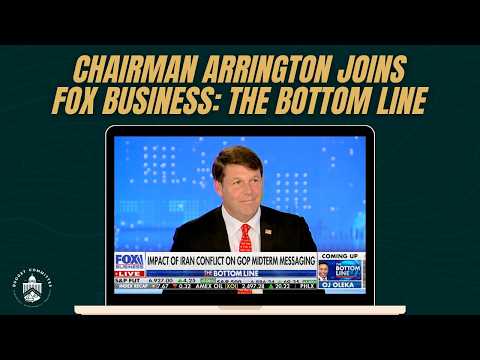
House Budget Committee chair Jody Arrington links Iran developments to national-security and economic priorities
Summary
In an interview, House Budget Committee Chairman Jody Arrington said recent developments in Iran underscore national-security priorities and defended the administration's response while tying security to economic stability at home.
Jody Arrington, House Budget Committee chairman, said recent developments in Iran highlight national-security priorities and their economic consequences. "The first and most important job of the federal government is to keep us safe," Arrington said, linking border security, crime and foreign threats to the country's broader stability.
Why it matters: Arrington framed Iran not just as a foreign-policy issue but as one that affects markets and everyday Americans. He warned of "an imminent threat of a nuclear Iran, and that's unacceptable," and praised the president's decision-making in responding to that threat.
Arrington said the U.S. had long suffered from what he called "appeasement and empty rhetoric" and argued that stronger posture restores stability. He tied that stability to economic indicators, saying steps to increase domestic energy production and trade negotiations are already supporting investment and wages.
On the markets, a host observed that the S&P 500 has largely returned to levels from before the Iran conflict began. Arrington said he expects energy production and trade activity to improve going into November, which he said will bolster the economy.
The interview combined national-security assertions with economic messaging, with Arrington presenting security measures as a prerequisite for economic confidence. The session ended with no formal policy action; it was an interview, not a committee vote.