Get Full Government Meeting Transcripts, Videos, & Alerts Forever!
Get email alerts on the Nuisance Ordinance topic
No spam. Unsubscribe anytime.
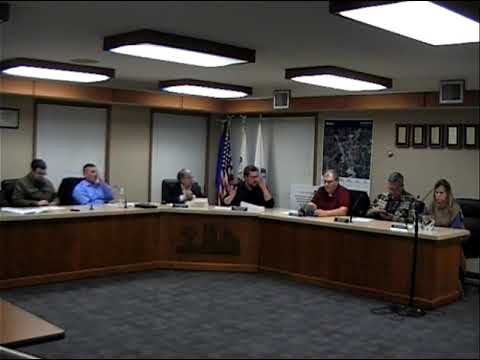
Morris council holds first reading of nuisance ordinance after residents raise wording and enforcement concerns
Summary
At first reading of Ordinance 129 (public nuisances), a resident flagged ambiguous language about “unnecessary and annoying vibrations,” numbering and potential conflicts over authority to inspect private property. Council debated whether the city manager should be named as the enforcing official or whether to retain broader 'city official' language; no final adoption was taken.
The Morris City Council held the first reading of Ordinance 129, a rewrite of the city’s public-nuisance code, and heard detailed public concerns about drafting, numbering and enforcement.
Annette Watson, a Morris resident who addressed the council during public comment, said the draft appears to have errors and unclear terms. She pointed to a missing subdivision number, questioned the meaning of the phrase “all unnecessary and annoying vibrations,” and urged clearer cross-references where the code invokes other ordinances. Watson also raised concerns that mandatory refuse-collection language could improperly require seasonal or absent residents to pay for service they do not receive.
Councilmembers and staff discussed enforcement language in the draft. One passage (Subdivision 9) says city officials “may apply and enforce any provision of this ordinance,” while a later sentence gives peace officers or designated officials power to inspect private premises. Councilmembers noted tension between a permissive “may” and a later “shall,” and asked whether the ordinance should identify the city manager or other specific officials as the enforcing authority. Blaine said the city has historically enforced code by complaint rather than systematic inspection, and described the city manager as the designated zoning administrator who typically oversees enforcement activity.
Blaine reminded the council that a first reading is an opportunity for public input and that more detailed drafting and possible repeal-and-rewrite of specific sections could occur before second reading. The council took no final vote on Ordinance 129 beyond carrying the first reading; the public will have another opportunity to comment at the second reading.
The council also discussed potential procedural edits (for example, explicitly naming the city manager or allowing delegation) and asked staff to return with cleaned-up language that clarifies who may issue notices or inspect property.