Lifetime Citizen Portal Access — AI Briefings, Alerts & Unlimited Follows
House Ways and Means hears SB 890 to pause collections, study whether hospitals''captive insurers should be taxed
Loading...
Summary
Lawmakers heard Senate Bill 890, which would impose a two‑year moratorium on collecting premium receipts tax from nonprofit hospitals while the Maryland Insurance Administration studies whether hospitals'use of captive insurers constitutes taxable insurance. Hospital representatives urged study; a whistleblower and advocacy groups said hospitals may owe millions.
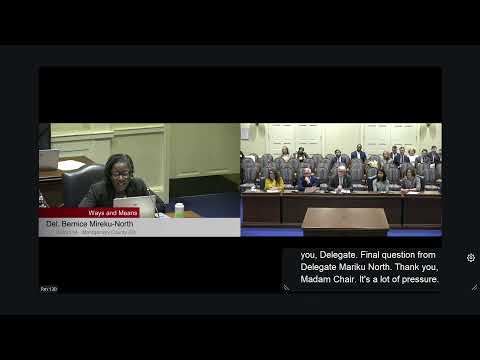
The House Ways and Means Committee on April 2026 heard testimony on Senate Bill 890, a measure that would pause enforcement of Maryland''s 3% premium receipts tax for nonprofit hospitals for two years while the Maryland Insurance Administration (MIA) studies whether payments to captive insurers should be treated as taxable premiums.
Sen. Don Guile, the bill sponsor, told the committee the legislation is intended to resolve "a good faith dispute" over the tax''s application and "does not absolve any tax liability." He described captive insurance as a form of self‑insurance hospitals use to manage complex liabilities and said the moratorium would give regulators time to study the legal and practical issues before requiring retrospective payments.
Andrew Nicholas of the Maryland Hospital Association said hospitals and systems use captives because the commercial market cannot reliably underwrite certain large or specialized risks, including malpractice and cybersecurity exposures. "Hospitals have nothing to hide when it comes to this issue or their use of captive insurance," he said, arguing the issue warrants study rather than immediate enforcement.
Supporters told the committee the bill as passed by the Senate sets a two‑year moratorium on collection by MIA from nonprofit entities while MIA conducts a prescriptive study to inform future policy. Witnesses acknowledged the study period might be shortened by amendment and said the association is open to answering follow‑up questions.
Opponents, including a whistleblower and consumer and labor advocates, urged an unfavorable report. Jason Chupe, who identified himself as a Frederick County resident and insurance industry veteran, said captive structures in jurisdictions such as the Cayman Islands allow for state premium taxes to be avoided and asked lawmakers not to give hospitals what he described as a de facto forgiveness. "There is over, certainly, we can argue whether it's $1.7 billion or $3.0 billion of Maryland money sitting in the Cayman Islands that is completely invisible to you," he said.
William Kress, who spoke on behalf of the whistleblower, and other critics said MIA issued bulletins in 2011 explaining filing and payment obligations under the federal and state reforms and argued the law does not differentiate nonprofit versus for‑profit entities for the premium tax. Advocacy witnesses urged the committee not to create a two‑tier system in which hospitals that have not paid would be spared collection while others paid.
Committee members pressed both sides on the fiscal scale and mechanics. The fiscal note cited by the committee cites roughly $2.0–$2.3 million in annual premium tax revenue potentially at stake spread across about 16 hospitals; the whistleblower estimated a possible floor of $20 million in back taxes over five years, and critics referenced a broader range of offshore holdings in the sector. MHA witnesses said the fiscal note's number is conservative, that some closed cases involved for‑profit entities, and that where the bulk of a risk resides can determine tax application.
Delegates also pressed witnesses on who ultimately pays when an offshore insurer fails to remit a premium tax. Witnesses and the whistleblower explained the tax is initially the insurer''s obligation and only reverts to a policyholder (the hospital) if the insurer does not pay; advocates noted some entities have paid when contacted by MIA.
No formal vote occurred at the hearing. Chair Janelle Wilkins thanked the whistleblower and both panels and said the Ways and Means panel would coordinate with the Health Committee on next steps. The hearing was adjourned; lawmakers announced a sequence of subcommittee meetings to follow.
The committee record shows a split between members who favor a study and temporary pause to avoid immediate disruption to hospital finances and those who contend the state should collect taxes now and not forego revenue while investigations are ongoing.