Get Full Government Meeting Transcripts, Videos, & Alerts Forever!
Get email alerts on the Public Engagement topic
No spam. Unsubscribe anytime.
FlashVote panel shows residents prefer text alerts and county newsletters, county presentation shows
Summary
County staff and FlashVote presented survey results showing residents favor text messages and digital newsletters for emergency and routine county communications; the panel was ~400 people and produced 150— 200 responses per survey, staff said.
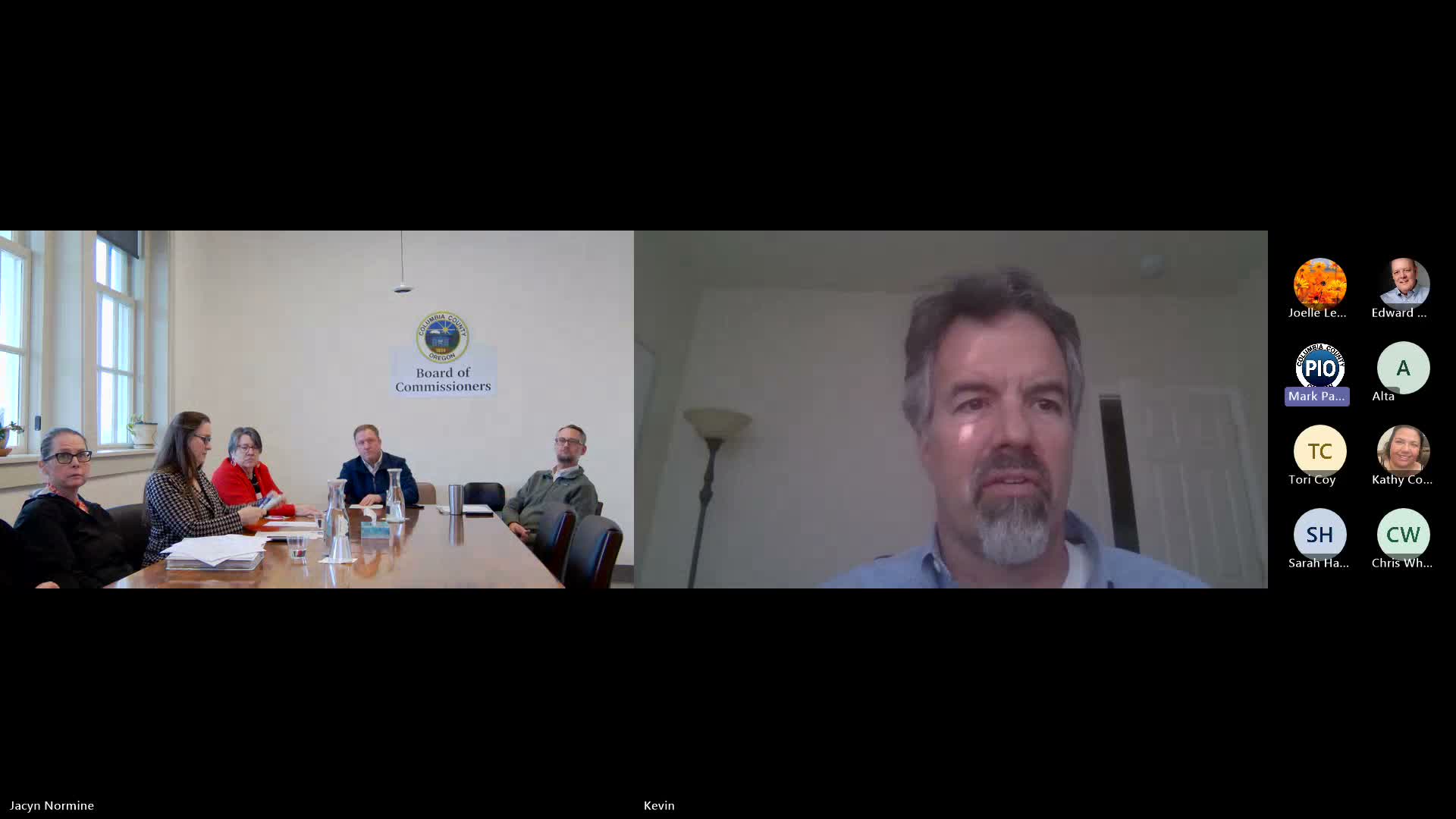
Columbia County's public information officer and a FlashVote representative presented the county's communications and website survey results March 11, showing clear resident preferences for text-message emergency alerts and for digital newsletters for routine notices.
Mark Pacheco, the county's public information officer, introduced Kevin Lyons of FlashVote, who described the vendor's panel-method approach: staff recruited an opt-in panel of roughly 400 residents, and typical survey response volumes range from about 150 to 200 people. Lyons said the panel design and optional contact methods (email, SMS, automated phone) allow staff to segment results by district, rural/urban status, gender and age.
Key findings Lyons highlighted: residents most often look for permits, licenses and property information on the county website; during emergencies, text messages are the top preferred channel for urgent alerts; and when residents prefer regular non-emergency notices they pick digital newsletters and email. "Text message still [is] number one for everyone," Lyons said while reviewing cross-tabs by user frequency.
Commissioners asked about panel representativeness and incentives. Lyons said the panel is recruited over time, participation is rewarded primarily by sharing results quickly with panelists, and the county also layered assessor/geography maps to ensure coverage by district and urban/rural categories. Pacheco noted that the county had already publicized the first survey on its Facebook page and that the survey link and results are shareable.
The presentation included a demonstration of FlashVote's dashboard (district filters, word-clouds for open-ended responses and AI-assisted summaries) and staff indicated the county will use the data to inform outreach choices (spend more on email/newsletter and text alerting; refine social-media strategy by platform and audience).
What's next: Staff said the communication and website results are available to the public via the county's channels; staff also identified a community-satisfaction survey as the next instrument to benchmark overall county performance.