Lifetime Citizen Portal Access — AI Briefings, Alerts & Unlimited Follows
Maria Turner leads Lake County planning commissioner training on duties, CEQA and public notice
Loading...
Summary
At a staff-development session, Maria Turner guided commissioners through Chapter 1 of the Institute for Local Government planning commissioner handbook, emphasizing the commission’s advisory 'gatekeeper' role, ministerial vs. discretionary review, public noticing rules, CEQA/AB 52 implications and how to access project records via the county OpenGov portal.
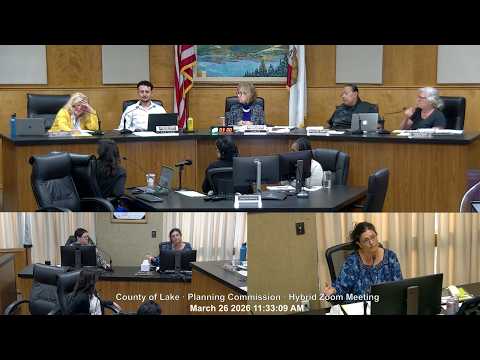
Maria Turner led a staff-development session for the Lake County Planning Commission on Chapter 1 of the Institute for Local Government’s planning commissioner handbook, explaining the commission’s advisory role, how projects are routed and what triggers environmental review.
Turner told commissioners the planning commission is an advisory body appointed by the Lake County Board of Supervisors and described the commission as “gatekeepers” who must determine whether projects conform to the community vision adopted through the Lake County 2050 general plan. “You are the gatekeeper to make sure that these projects are compliant,” Turner said.
Why it matters: The session outlined how staff analysis, technical studies and ordinance findings translate into conditions and recommendations the commission uses to approve, modify or deny land-use projects — decisions that shape local development and cultural-resource protections.
Turner walked the group through how staff routes projects: some are handled administratively by the zoning administrator, while other matters go to the planning commission or directly to the board depending on the ordinance and authority split. She described the zoning-administrator notice practice: the notice can be worded to say the department intends to approve unless it receives a written request for hearing by a deadline. “When we send out the noticing, it’s worded differently than a major use permit,” Turner said, noting that for some administrator actions the public has a 10-day window to request a hearing.
Planning staff demonstrated the county’s OpenGov portal and how project records and tracking sheets appear online. Michelle, a planning staff member who displayed the portal, showed how project records now use OpenGov PL numbers and retain historical records from the county’s prior Acela system. She noted that while many project summary fields are public, some attachments and confidential cultural reports are not visible in the portal.
On CEQA and tribal consultation, staff clarified that fully ministerial projects — actions with no discretionary element — are generally not subject to CEQA and do not trigger AB 52 tribal consultation; discretionary actions, including many use permits and grading approvals, do. An agency official summarized the distinction: “A ministerial project is something that has no discretionary element to it” and is effectively a check-the-box approval, whereas discretionary decisions require findings and analysis.
Commissioners raised concerns about cultural-resource records that may exist outside planning files, citing historical surveys and academic work that are not always centralized. Staff urged commissioners and tribal representatives to provide any privately held studies so staff can determine whether they apply to a given project and recommended using the formal tribal consultation and agency referral processes early in review.
The session also covered notice distances and typical examples: notices are mailed to property owners within about 300 feet or 725 feet depending on parcel size, and common minor-use examples include overheight fences or collector permits. Staff reminded commissioners that applicants are not always the property owners and that some records identify project consultants rather than owners.
Separately, commissioners discussed whether applicants should be seated at the dais to answer technical questions and how to limit extended applicant presentations to preserve fairness for public commenters. The commission agreed to discuss potential procedural changes to balance applicants’ ability to respond with the public’s three-minute comment period.
Staff concluded with administrative announcements: the county issued an RFP for a consultant to review fees and organizational structure (the RFP closes April 24), and staff noted they will redistribute planning commission clerk duties after a staffing change.
The meeting ended without formal votes. The commission moved to adjourn after completing the planned overview and Q&A.