Assembly Insurance Committee advances wildfire‑mitigation, FAIR Plan, aerial‑image and genetic‑data bills; moratorium extension moves forward
Loading...
Summary
The Assembly Committee on Insurance heard testimony and voted to advance multiple bills including workforce and prevailing‑wage rules for wildfire mitigation (AB 1888), FAIR Plan reforms (AB 1680), consumer protections for aerial imagery (AB 1559), limits on use of genetic test results in life underwriting (AB 1798), and an extension of wildfire moratoriums (AB 2038).
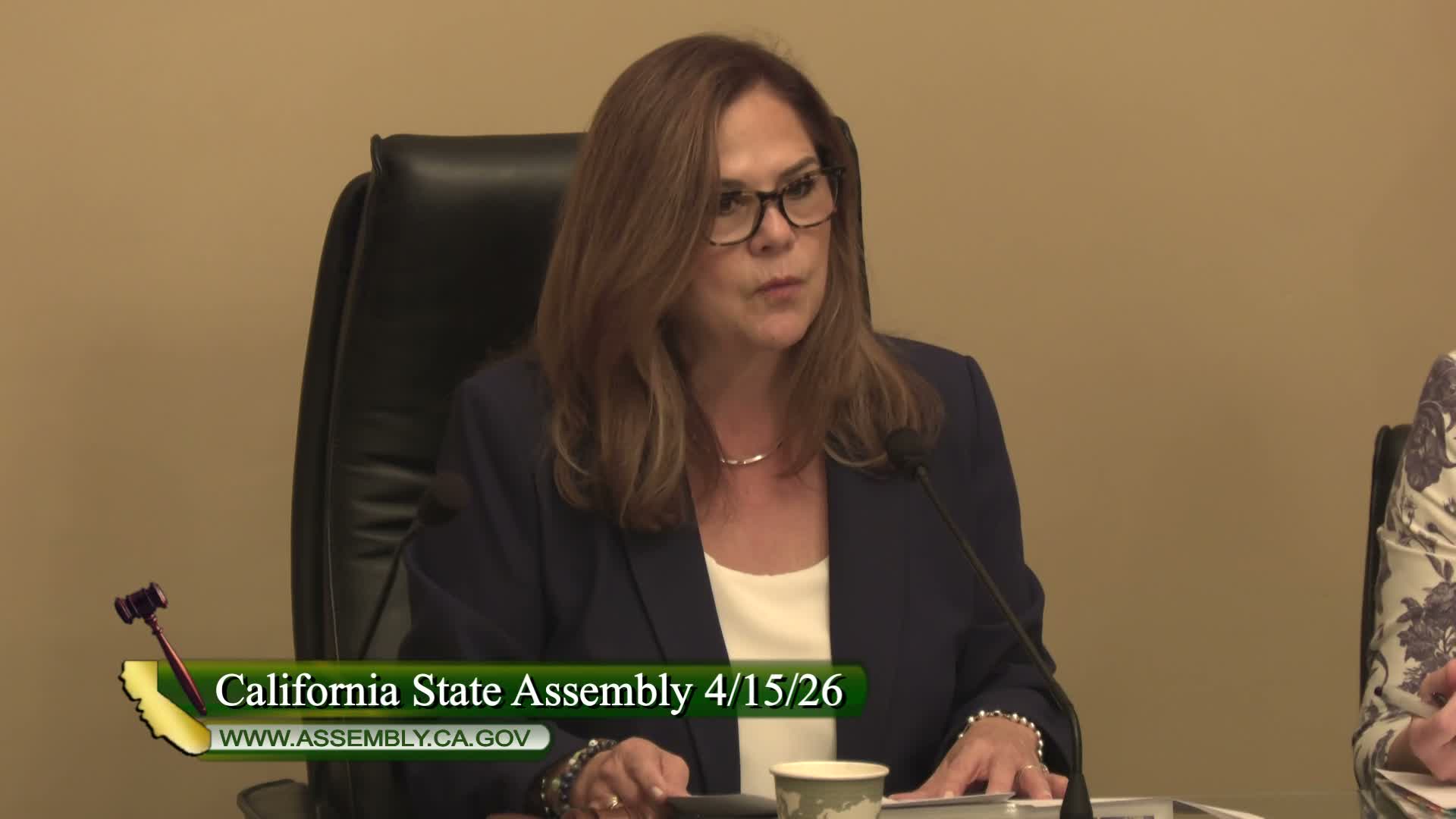
The Assembly Committee on Insurance on [date not specified] considered 11 bills and moved several forward to other committees after hours of testimony from state officials, consumer advocates, industry groups and providers.
Assemblywoman Ortega introduced AB 18 88, a measure that would require work funded through the California Safe Homes Grant Program to be performed by a ‘‘skilled and trained’’ workforce and paid prevailing wages. Insurance Commissioner Ricardo Lara, who sponsored the underlying grant program, said the bill is intended to ensure mitigation projects are done correctly and consistently. "Without clear workforce standards, we risk funding projects that could be inconsistent, incomplete, or ineffective," Lara said, urging an aye vote. Jeremy Smith of the State Building and Construction Trades Council said prevailing‑wage and apprenticeship standards protect workers and taxpayers and help ensure quality workmanship.
The committee also moved AB 16 80, the "Make It Fair Act," to the Committee on Appropriations after Lara described repeated failures by the California FAIR Plan to implement key recommendations identified in departmental examinations. "The FAIR plan is no longer a niche backstop; it is the insurer of last resort for hundreds of thousands of Californians and it is failing to meet that responsibility," Lara told the committee, and he framed AB 16 80 as necessary to modernize governance, transparency and consumer protections.
On consumer privacy, Assemblymember Calderon presented AB 15 59 to require insurers to notify homeowners before collecting aerial images of a residence, to make such images available to policyholders, and to allow an in‑person inspection when aerial imagery is used to nonrenew, cancel or reduce coverage. Lara and supporting groups including the League of California Cities and United Policyholders argued the bill will give homeowners transparency and an opportunity to dispute inaccurate or outdated imagery.
AB 17 98, introduced by Assemblywoman Wilson, would bar life and non‑health disability insurers from using non‑diagnostic genetic information obtained directly by consumers in underwriting for most policies, subject to a $1.5 million coverage threshold adopted as a committee amendment. Wilson said the change will protect privacy and encourage participation in genetic research; patient and advocacy witnesses including the ALS Association urged support. Industry witnesses, including agents and company medical staff, opposed the bill unless amended, arguing that underwriters rely on medical data to price risk and that restricting access could raise uncertainty and premiums. "Being able to accurately predict risk is critical to fair and accurate insurance rates," said Michael Morris of NAIFA California.
Legislators also debated AB 20 38, which would extend moratorium protections after wildfire losses (extending total‑loss moratoria from two to three years and adjacent‑area moratoria from one to two years). Authors and supporters said the extension reflects the real timelines for recovery and rebuilding; property‑casualty industry representatives warned extensions without solvency safeguards could strain carriers' ability to rebalance risk. The committee voted to pass AB 20 38 to the Committee on Appropriations.
Votes at a glance - AB 16 80 (Make It Fair Act): passed out to Committee on Appropriations (motion carried; recorded roll call in committee). - AB 15 59 (aerial‑image consumer protections): passed out to Committee on Privacy and Consumer Protection (on call; roll recorded). - AB 18 88 (California Safe Homes — prevailing wage/ skilled workforce): passed out to Committee on Labor and Employment. - AB 17 98 (genetic‑information limits, as amended with $1.5M threshold): passed as amended to Committee on Privacy and Consumer Protection (roll recorded). - AB 20 38 (moratorium extension): passed out to Committee on Appropriations (roll recorded). - AB 1,800 (portable eyewear insurance): passed to Appropriations (consent). - AB 2,198 (title‑rate filing clarification): passed to Appropriations.
What came through in debate Supporters framed the wildfire‑related measures as consumer protections: better‑specified workforce standards for mitigation work, and more time and predictability for homeowners rebuilding after catastrophic loss. Advocates said FAIR Plan reforms are urgent after departmental examinations found many outstanding recommendations and consumers struggling to get post‑fire claims resolved.
Opponents focused on market consequences: insurance industry witnesses argued that broader moratoriums and limits on underwriting information could reduce carriers' ability to manage portfolios, potentially accelerating pullbacks from the admitted market or shifting costs to other policyholders unless solvency safeguards are included.
What’s next Most of the bills discussed were referred to appropriations or privacy committees for further consideration. Several items on the consent calendar were moved forward, and the committee adjourned after completing roll calls.
Reporting note: quotes and vote outcomes are taken from committee testimony and roll calls recorded in the official transcript. Where the transcript recorded a roll call or committee action, the clerk’s motion text and committee referral are reported here (for bill routing and outcomes); detailed final vote tallies will appear on the Assembly’s official vote records when posted.