Cook County committee defers resolution on CTE awareness after family testimony and expert briefing
Loading...
Summary
After family testimony and an expert briefing on chronic traumatic encephalopathy (CTE), the Cook County Health and Hospitals Committee voted to defer a resolution asking county public‑health agencies to develop CTE awareness and referral programs; commissioners pledged further outreach to schools and sports programs.
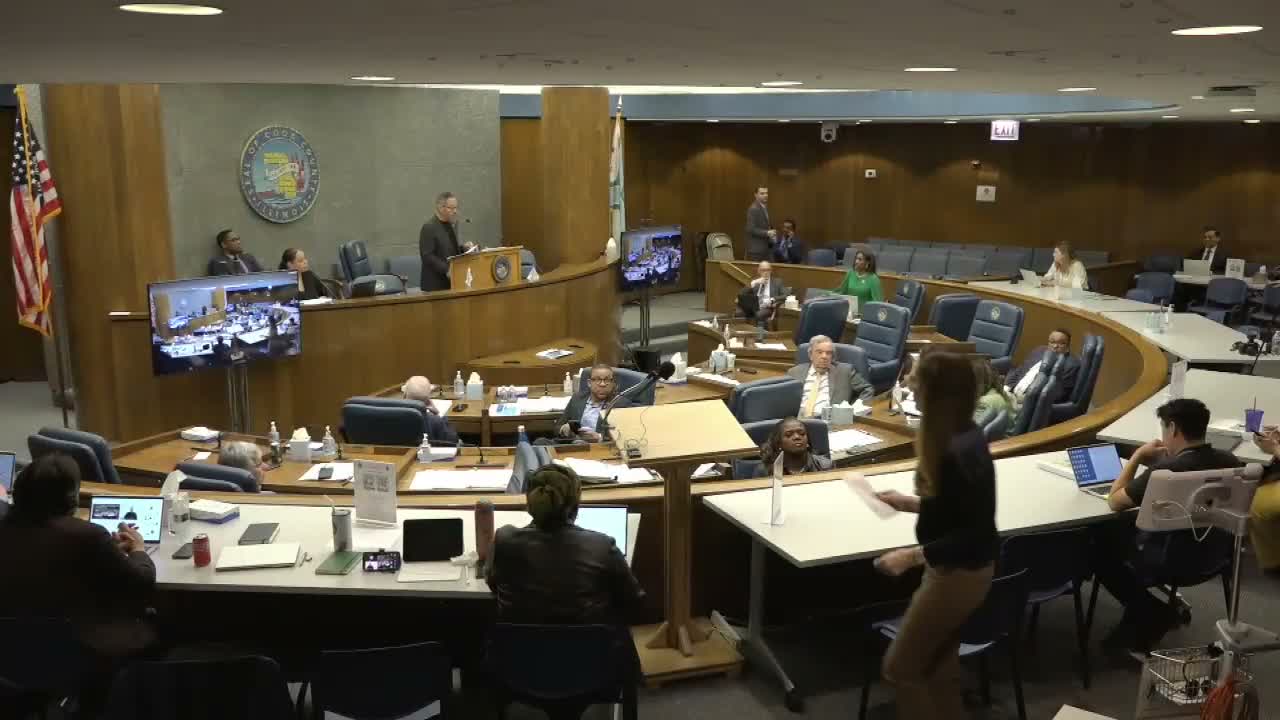
Family members, medical researchers and county public‑health staff pushed Cook County officials on steps to prevent and respond to chronic traumatic encephalopathy, and the Cook County Health and Hospitals Committee voted to defer consideration of a resolution on the topic.
Commissioner Tara Stamps introduced the issue with personal testimony and urged action, saying the county should “prioritize safety, education, and prevention” for youth sports. Family members described long-term cognitive and behavioral decline they associate with former athletes’ repeated head impacts. Liz Nicholson, who said her husband, a former professional player, has Alzheimer’s and suspected CTE, thanked commissioners for bringing attention to the issue.
Dr. Chris Nowinski, chief executive of the Concussion and CTE Foundation, told the committee that CTE is a progressive, dose‑response brain disease linked to repetitive head impacts and that prevention requires reducing both the number and the force of hits to the head. “This is a preventable, dementing illness where exposure begins as a child,” Nowinski said, describing brain‑bank findings and stage‑based risks that, he said, correlate with years of play.
The county’s public‑health presenter (Dr. Joshi) described outreach steps the department is taking, including social‑media messaging, a downloadable fact sheet for school health staff, webinars for school nurses and administrators, and targeted outreach to park districts and schools.
Commissioners asked for more outreach to youth programs (including Pop Warner and other leagues), pressed a presenter about whether imaging or biomarker tests could detect CTE before death, and emphasized school‑ and coach‑level training. Commissioner McCaskill asked whether very young programs should be included; a county presenter agreed that repetitive impacts and intensity — not only diagnosed concussions — drive risk.
Public commenters reflected varied perspectives: Bob Ryder, who said he advises the Concussion and CTE Foundation, recounted his playing history and urged protections for young athletes; Kenneth Newman, a longtime referee and coach, called for compliance with state AED requirements and broader concussion training for coaches and staff. Another commenter complained about patient experiences at Cook County hospitals and used inflammatory language during remarks; the clerk warned as the comment period concluded.
Vice Chair Naya moved to defer item “20 six‑six 49,” described in the meeting as a resolution requesting that the Cook County Department of Public Health, in conjunction with Cook County Health, develop CTE awareness programs, facilitate referrals to concussion clinics, request state regulation of name‑image‑likeness (NIL) deals, and seek federal research funding. Commissioner Tara Stamps seconded the motion. The committee chair stated the ayes had it and later called for adjournment; the meeting ended without the committee taking final action on the resolution.
Next steps: commissioners and county public‑health staff indicated plans for additional outreach to schools, park districts and athletic programs and for webinars aimed at school health professionals. The resolution remains deferred pending future committee consideration.