Committee advances mobile signature‑curing bill to help Californians fix rejected mail ballots
Loading...
Summary
AB 26 04 would have the Secretary of State implement or support a statewide mobile signature‑curing system so voters can use smartphones to remedy missing or mismatched vote‑by‑mail signatures; proponents said it reduces rejections and helps younger voters, and the committee moved the bill forward.
Assemblymember Berman presented AB 26 04 as a measure to expand a county pilot into a statewide option allowing voters to cure missing or mismatched vote‑by‑mail signatures electronically. "By allowing Californians, especially our younger voters, the ability to use their smartphones to cure a ballot envelope signature, we provide an accessible, simple, and timely way for voters to have their ballots counted," said Kim Alexander of the California Voter Foundation.
Ben Gipps of Protect Democracy United, a cosponsor, told the committee mobile signature curing reduces delays and helps voters confirm they completed the curing steps. He said counties that already offer the tool report improved outcomes and that Colorado and Nevada have implemented similar statewide systems.
Opponents at the mic raised verification concerns about registration and signature matching; David Volk of a local alliance said the registration process requires stronger checks. Supporters and the author responded that registration databases and verification processes remain in place and that the statewide tool is intended to complement existing safeguards.
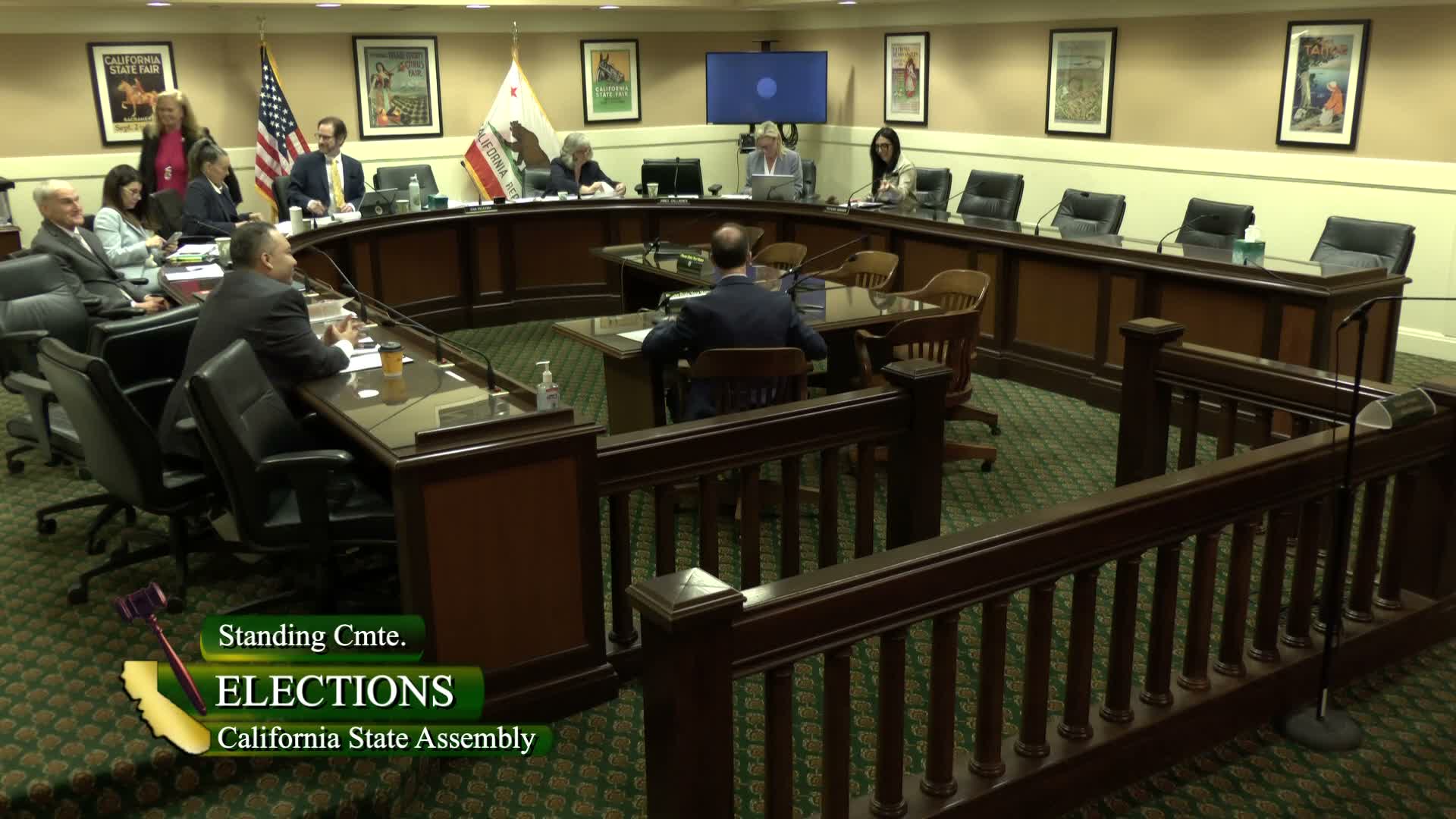
The committee passed AB 26 04 to appropriations with a recorded vote; members urged further technical work with county election officials to ensure secure implementation and to address fraud concerns.
Next steps: The bill moves to the appropriations committee; county pilots and outreach will inform technical implementation details.