Lifetime Citizen Portal Access — AI Briefings, Alerts & Unlimited Follows
Sen. Blakespear's bill to let 16' and 17'year'olds get library cards without a parent present advances
Loading...
Summary
SB 965 would allow 16- and 17-year-olds to obtain a public library card without a parent or guardian's physical presence while preserving local control over materials and liability; the Education Committee passed the bill to Appropriations after discussion with library groups about operational concerns.
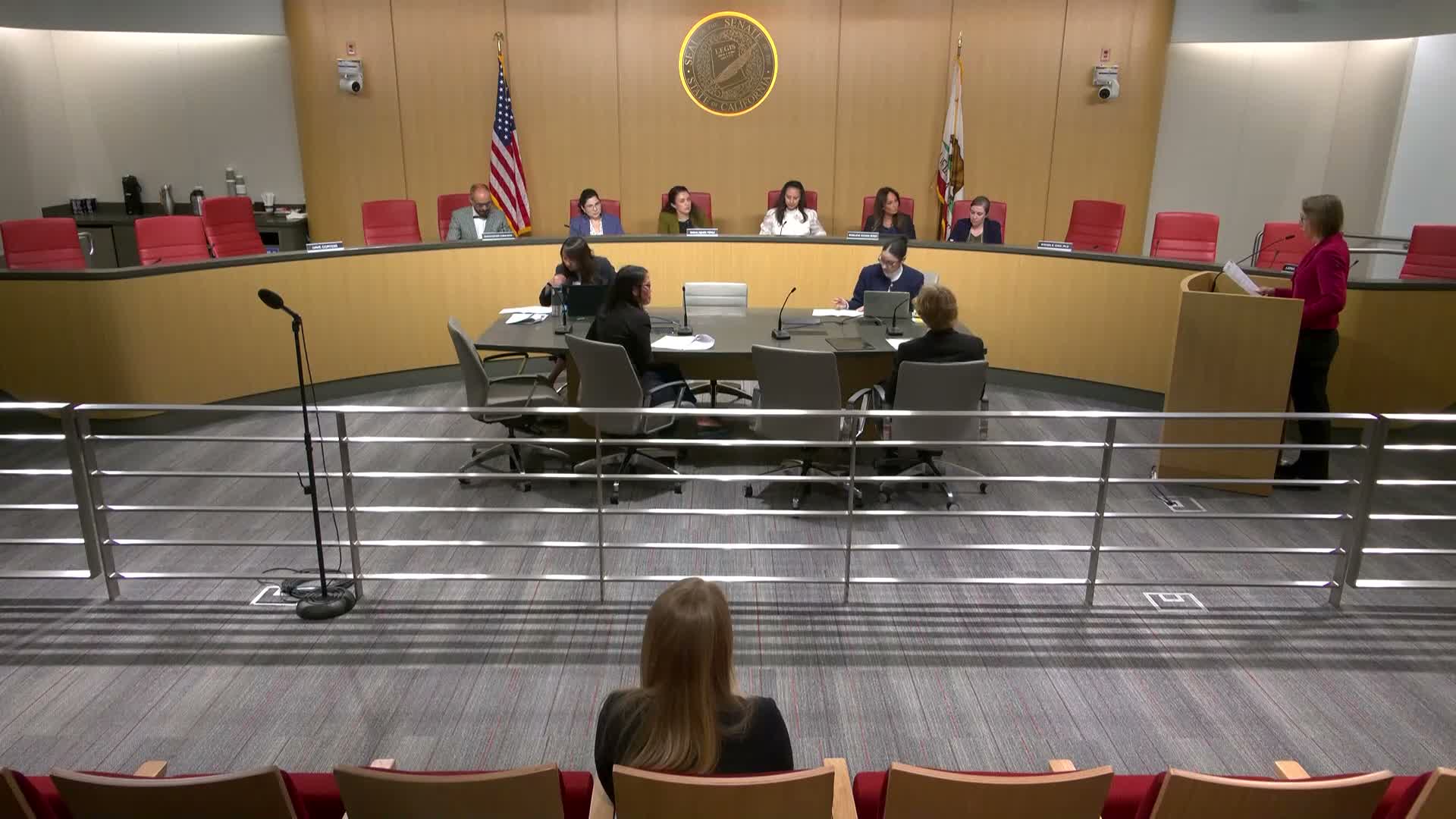
Senator Blakespear told the committee that SB 965 removes an unnecessary barrier by allowing 16- and 17-year-olds to obtain public library cards without a parent or guardian's physical presence, while preserving local control over borrowing limits and liability.
The senator recounted a personal example of his son and said the bill is a narrow modernization: "Libraries offer important access to education, job resources, and technologies... We should be expanding the role that libraries have in students' lives, not adding barriers that limit access depending on where you live."
Oliver Blakespear, a 17-year-old high-school student, testified that he had been denied a library card because a parent could not be physically present, and urged the committee to reduce barriers for students completing school projects. Tiffany Mach of the California Federation of Teachers supported wider access for students.
Library representatives welcomed the goal but raised operational and local-control concerns. Erica Tibo, library director at Sonoma County Library representing the California Library Association, said some policies are set locally to address replacement costs and parental preferences and urged a collaborative approach: "We think that approach reflects both the intent of the bill and the diversity of communities across California." Pacific Library Partnership and other regional library systems cautioned that MOUs with school districts and fiscal impacts vary across jurisdictions.
The committee debated liability and implementation details, discussed student-success card programs as an alternative, and recommended continued negotiation with library systems. The bill was passed as amended to the Senate Appropriations Committee for fiscal consideration and further stakeholder work.