Get Full Government Meeting Transcripts, Videos, & Alerts Forever!
Get email alerts on the Opioid Settlement topic
No spam. Unsubscribe anytime.
Committee approves $405,000 in renewals for opioid-settlement grantees
Summary
Lake County’s Health & Community Services Committee approved renewing six of seven opioid-settlement grant recipients for a second year, allocating $405,000 now and leaving remaining funds for a fall grant cycle to help programs meet startup KPIs.
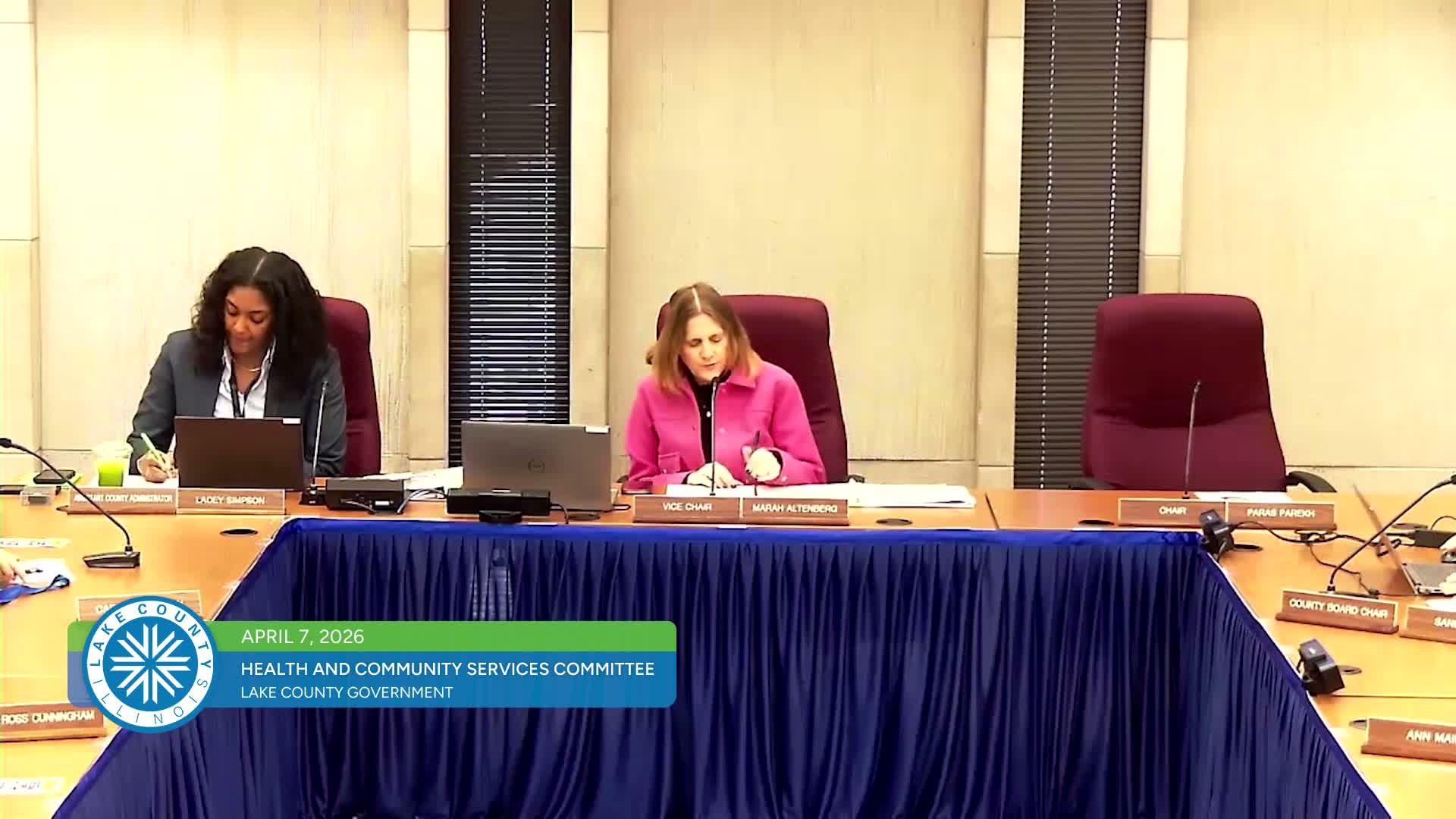
Ruth Ann Hall, assistant county administrator, told the Health & Community Services Committee on April 7 that staff and the county opioid working group recommend renewing six of seven prior opioid-settlement grantees for a second year, with proposed awards totaling $405,000.
Hall said the working group — which includes representatives from the state’s attorney’s office, public defender, sheriff’s office, courts, county administration, community development and the health department — reviewed quarterly reports and recommended renewals to help programs meet their key performance indicators and complete start-up tasks. "One of the stipulations with the grants was that they were to be new programs," Hall said; staff found several grantees needed additional time to meet targets and offered six of the seven a second year.
The county had identified $700,000 for opioid settlement grants in the budget. Approving the renewals now would allocate $405,000 and leave the remainder to support a fall application cycle, Hall said. She described the remaining funds as a planned carryover into the next competitive round so new applicants and established programs can apply.
A committee member asked whether organizations must serve people with opioid addiction to qualify. Hall replied that allowed fund uses are for opioid remediation — treatment, prevention, harm reduction and related case management — and that the county limited this round to harm reduction and case-management uses. "For the opioid allocation, 70% of the funds have to be used directly for that," Hall said, adding staff preserved the program focus for the renewals.
Multiple members praised Ashley Watson, the county’s opioid coordinator (Watson was off-site), for grant management and outreach. After discussion, the committee moved and approved the staff recommendations on a voice vote.
The committee said it will run a second grant cycle in the fall to award the remaining budgeted funds.