Get Full Government Meeting Transcripts, Videos, & Alerts Forever!
Get email alerts on the Risk Management topic
No spam. Unsubscribe anytime.
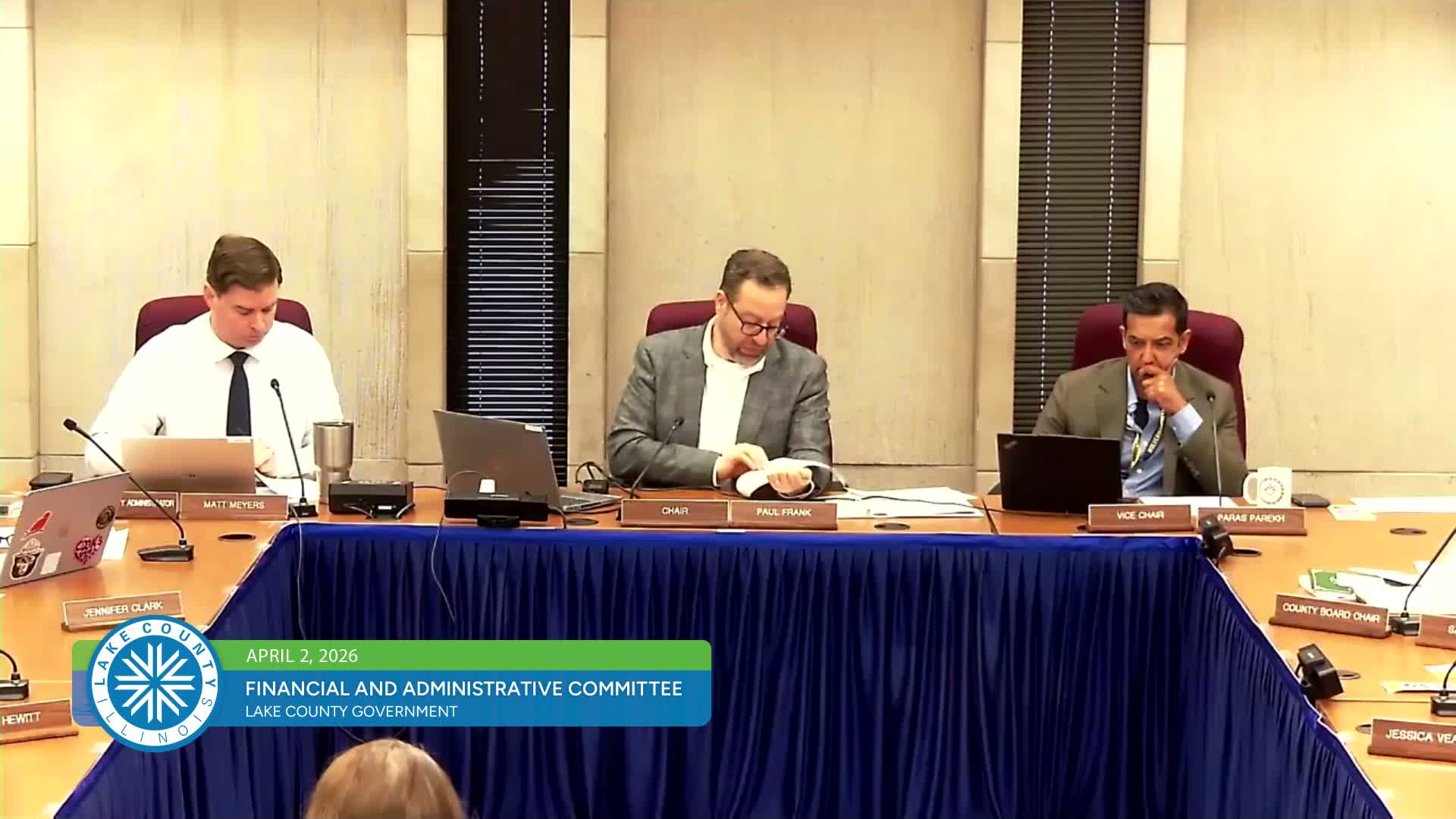
Committee approves $2M emergency appropriation for liability fund; backs limited bridge for HUD CoC providers
Summary
The committee authorized a $2.0 million emergency appropriation from the liability insurance fund for settlements and expressed willingness to use a county federal‑contingency bridge to provide up to 60 days of funding (~$513,000 requested) to Continuum of Care partners while HUD litigation/unresolved renewals play out.
The Lake County Finance & Administrative Committee unanimously approved an emergency appropriation of $2,000,000 from fund 206 (risk management and liability insurance) to cover settlement expenses that exceed the fiscal‑year 2026 budgeted amount.
Risk Manager Erica Ocinski explained the fund structure and actuarial process: an independent actuarial firm (Milliman Inc.) calculates the county’s actuarial reserve annually, and the annual budget includes a smaller near‑term settlement appropriation ($800,000 for FY26). Ocinski said the county has already paid about $1.1 million in settlements this year, has about $1.2 million pending from prior approvals, and that paying all pending items without an appropriation would create a deficit. The requested $2,000,000 appropriation will provide a working buffer for expected settlements and reduce the need for frequent emergency amendments.
Separately, County Administrator Sutton and Dominic Strezzo of Community Development briefed the committee on a federal‑contingency fund created last month to bridge verified federal funding interruptions. Strezzo said HUD’s recent NOFO changes and subsequent litigation reduced the share of ‘protected’ CoC renewal funding and have produced cash‑flow risk for local homeless‑services providers. Community Development requested about $513,000 (a 60‑day bridge) to be made available to CoC partners under contracts with clawback provisions if HUD funding is ultimately restored.
Committee members voiced support for using the contingency fund as a bridge, stressing careful subcontracts, clawbacks and that the county is not permanently committing to long‑term funding. Members noted the moral and financial rationale for short‑term support to keep people housed and to avoid higher costs associated with people losing housing.