Get Full Government Meeting Transcripts, Videos, & Alerts Forever!
Get email alerts on the Fund Balance Policy topic
No spam. Unsubscribe anytime.
Goochland committee weighs lowering 'available fund balance' target; schedules workshop
Summary
County financial advisor Kevin Roddy (PFM) recommended lowering the new available fund-balance target from the current 55–65% range to a more attainable 35%, citing peer comparisons and rating-agency considerations; the committee voted to hold a policy workshop before the January board meeting to finalize the change.
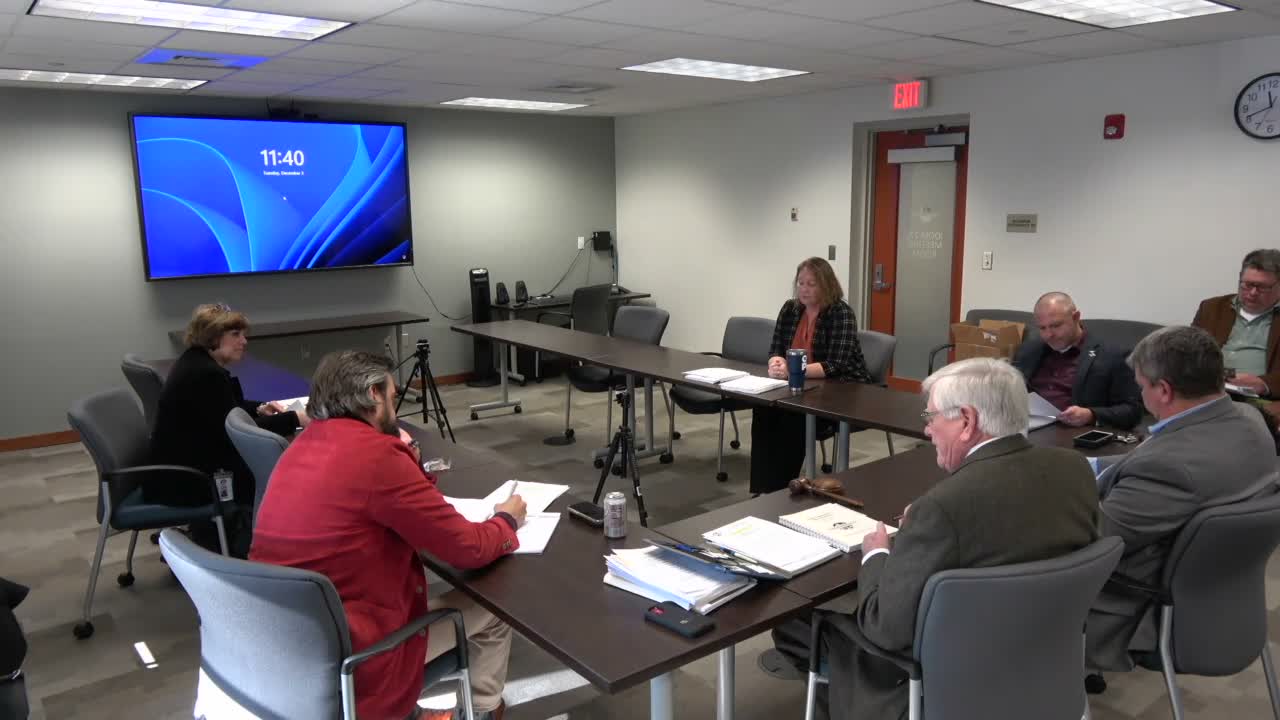
The Goochland County Finance and Audit Committee spent the bulk of its meeting debating whether to revise the county's recently adopted "available fund balance" policy, which currently sets a target range of 55–65% of general-fund budgeted amounts.
Kevin Roddy, a partner with PFM Financial Advisors, presented peer comparisons and rating-agency perspectives, and recommended a lower, attainable target of about 35 percent while preserving a strong unassigned fund balance and a small revenue-stabilization reserve. "It's about $12,700,000 to come in compliant" with the higher 60% end of the original policy, Roddy said, and he noted that the county currently stands near 22% unassigned and that other rating agencies' guidance ranges widely (Moody's ~35%, S&P ~15%, Fitch ~7.5%, as cited by the advisor).
Committee members expressed mixed views. Some argued the original policy's 55–65% target was overly conservative and unattainable without diverting funds from planned capital projects; others urged caution and asked for more documentation about the policy's original rationale before making a change. Staff reported that the county had intentionally used fund balance to front-load capital projects in the previous year (about $8 million in one speaker's remarks) and that the next budget draft in February will show how different target choices would affect planned spending.
After discussion, the committee voted to schedule a dedicated workshop before the January board meeting to review options, ask further questions (including whether to invite PFM), and make a recommendation in time for the FY2025–26 budgeting process. Staff said the PFM advisor is on retainer and could be available to attend by phone.
Why it matters: The available fund-balance policy directly affects how much cash the county retains for contingencies, influences bond-rating surveillance and borrowing costs, and constrains the pool of funds available for capital projects or one-time spending. Committee members emphasized the need to set a policy that is both prudent and achievable, and to finalize the decision before the next formal budget cycle.
Next steps: Staff will prepare budget scenarios for the committee's February review and the planned pre-January workshop will formalize the committee's recommendation to the full board.